

Quick summary
- Young setters often default to the same hitter regardless of what the block looks like, which makes them easy to defend.
- A few simple block pictures, taught in stages, are enough for a young setter to start reading the defense.
- Praising a correct read, even when the hitter doesn't convert, keeps a setter trusting the process over habit.
Why Reading the Block Changes a Set
Definition
Reading the defense: The habit of scanning the block's number, position, and timing in the split second before a setter decides where to send the ball, rather than choosing a target out of habit.
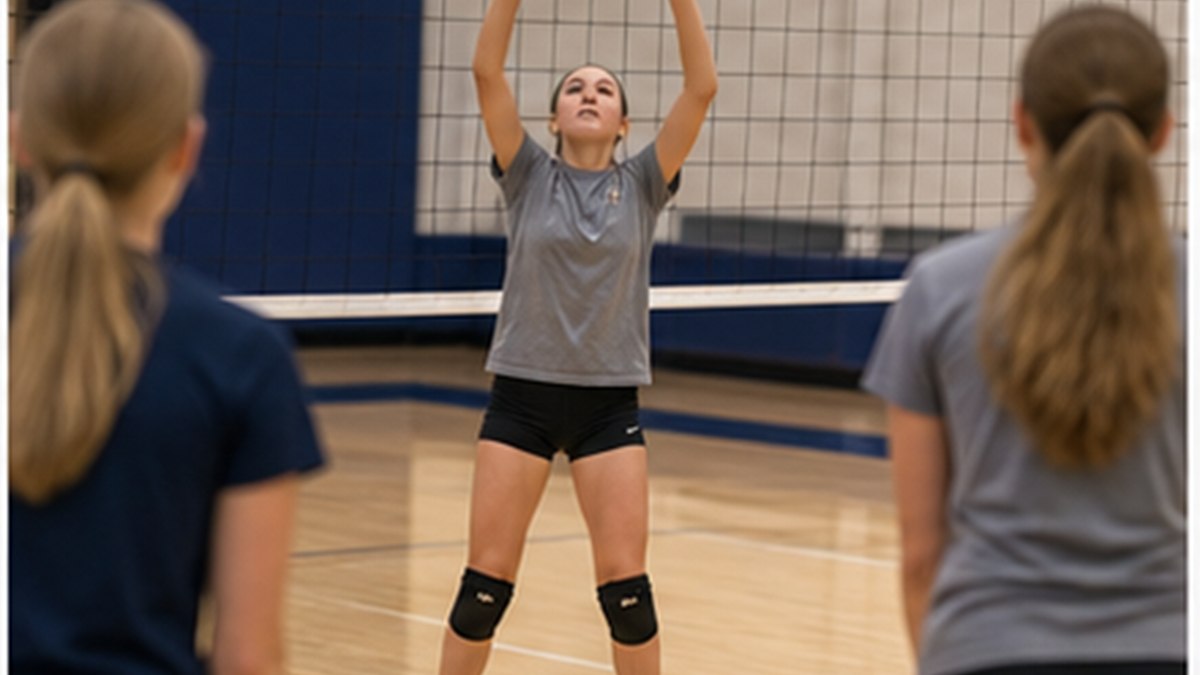
Many young setters make their decision before the pass even arrives, defaulting to the same go-to hitter no matter what the block looks like. That habit is easy for an opponent to defend once it becomes a pattern.
Reading the defense means training a setter's eyes to check the block picture in the same beat they judge the pass, so the decision responds to what's actually in front of them.
Build a Simple Block Picture to Read
Young setters don't need to process everything a college setter does. A few clear pictures - how many blockers are up, whether the middle committed early, whether one side is undefended - are enough to start.
Coaches can walk through these pictures with cones or teammates standing in as blockers before adding live speed, so the setter learns to recognize them quickly.
| Block Picture | What It Means | Better Set Option |
|---|---|---|
| Middle blocker commits early to a quick set | The middle is out of position for anything else | Set outside to the antenna |
| Only one blocker is up in time | One hitter is likely uncovered | Set away from the lone blocker |
| Blockers are set and squared before contact | No obvious opening yet | Use tempo or location change instead of forcing it |
Teach the Read in Stages, Not All at Once
Start setters in a stationary drill where they only have to identify the block picture out loud, without setting yet. Once they can name what they see quickly, add the set.
From there, move to live reps against a partial defense, then a full block, so the read speeds up gradually instead of overwhelming the setter on day one.
- Have the setter call out the block picture before every rep, with no set attached.
- Add a simple set once the setter can identify the picture quickly.
- Progress to live blockers and full-speed passes once the read is automatic.
Break the Habit of Defaulting to One Hitter
Even setters who can read the block will sometimes fall back on their favorite hitter under pressure. Coaches should track this in scrimmages and point it out specifically, not just tell the setter to "mix it up."
Praise good reads even when the result isn't a kill. Rewarding the decision, not just the outcome, keeps the setter trusting the process.
- Charting where every set goes during a scrimmage to spot the pattern
- Asking the setter what they saw right after a set, win or lose
- Praising a correct read even when the hitter doesn't convert
- Rotating who the setter practices against so no read becomes automatic
Related SportX1 resources
Frequently asked questions
What age should setters start learning to read the block?
Most setters can start with simple block pictures around age 11 to 13, once they can consistently set to a target without thinking about footwork.
Do I need a full team to practice reading the block?
No. Two or three players standing in as blockers, or even cones marking block positions, are enough for a setter to start practicing the read before live speed is added.
What's the most common mistake young setters make with reads?
Defaulting to the same hitter regardless of the block picture is the most common pattern. It usually comes from comfort rather than a lack of ability to read the defense.
Help setters practice reading the block, not just setting
Use SportX1 to chart set distribution, track a setter's reads over time, and turn decision-making into a coachable skill.
Related articles
How to Teach a Passing Platform Young Players Can Repeat Under Pressure
A step-by-step way to teach youth volleyball players a consistent passing platform, so serve receive holds up once the pressure of a real game arrives.
How to Teach a Hitting Approach Youth Attackers Can Time to the Set
A repeatable footwork pattern and arm swing timed to the set, so young hitters stop rushing their approach and start attacking with rhythm.
How to Help Players Read Pressure Before They React
A cross-sport approach to developing decision-making: teaching young athletes to recognize pressure early instead of reacting to it after the fact.

About the author
SportX1 Editorial Team
Coach-reviewed guidance for youth sports learning, player development, team operations, and AI-supported coaching workflows.