

Quick summary
- Route timing breaks down when receivers run the same route at a different depth every time, not because of speed or hands.
- Cone-marked route trees give young receivers a fixed, visible target for exactly where each cut should happen.
- Consistent depth matters more early in a receiver's development than route-running speed or fakes.
Why Depth Consistency Matters More Than Route Speed
Definition
Route depth: The exact distance downfield where a receiver plants and breaks on a route, measured from the line of scrimmage, that a quarterback times their throw to.
A quarterback's timing on a comeback or curl route depends on the receiver breaking at the same depth on every rep, not just running the right shape. When a young receiver rounds a cut two yards short or long, the ball arrives to a spot the receiver isn't at yet, and it looks like a quarterback problem instead of a route problem.
Coaches often spend more time on hand technique and releases than on depth, because depth mistakes are harder to see at full speed. Fixing depth first actually makes the rest of route-running easier to coach, since the receiver and quarterback are finally working off the same picture.
A receiver who runs an in-route at 12 yards every time is easier to throw to than one who runs it beautifully but at a different depth each rep.
Using Cone-Marked Route Trees to Fix the Target
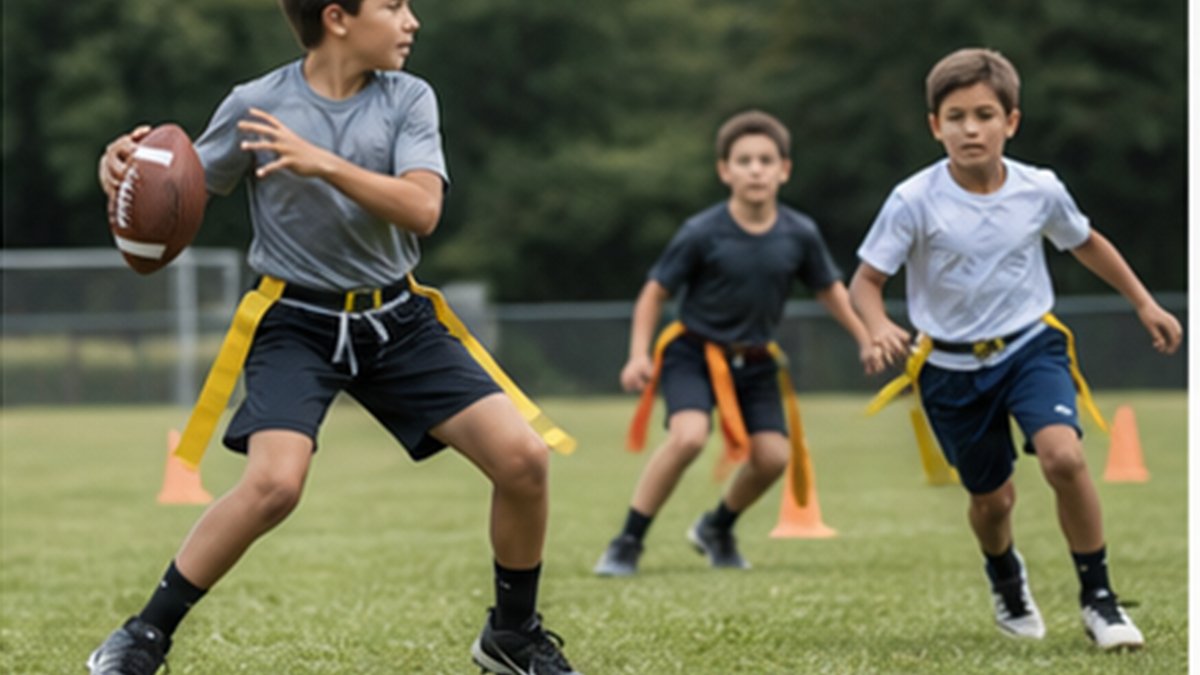
A route tree drawn out with cones at set depths gives a young receiver something concrete to aim for instead of an abstract number like '12 yards.' The cone becomes the checkpoint: break at the cone, not near it.
Coaches should place cones at the actual depth the route calls for in the offense, not a rounded practice number, so the habit transfers directly to game routes without an adjustment period.
- Set a cone at the exact break depth for each route in the tree.
- Have the receiver plant and break directly at the cone, not before or after it.
- Remove the cone after several reps and check whether the depth still holds.
- Repeat at game speed once the depth is consistent at walk-through pace.
Building the Teaching Progression Step by Step
Depth training works best as a short progression rather than a single long drill block, since young receivers lose focus on precision once reps get repetitive. Each stage adds one layer of difficulty back toward game speed.
Coaches shouldn't move a receiver to the next stage until depth holds consistently at the current one. A receiver who is still missing the cone at walk-through pace isn't ready for the added speed and decision-making of the next stage.
- Walk the route at cone depth with no ball, checking footwork and break point.
- Run the route at half speed with a thrown ball, still using the cone.
- Run the route at full speed with the cone still down as a visual check.
- Run the route at full speed with the cone removed, against a defender.
Checking Whether Depth Holds Under Coverage and Fatigue
Depth that looks consistent in an unopposed drill can fall apart once a defender is pressing or the receiver is tired late in practice. That's the real test of whether the habit has actually been built, not just rehearsed.
Coaches can track this by position group and route type rather than treating every receiver as consistent because one route looked clean. A receiver's depth on a curl and their depth on a comeback often develop at different rates.
Against Coverage
Add a defender in press or off coverage once depth is clean unopposed, and watch whether the receiver still breaks at the marked depth or shortens the route to create separation.
- Note any route that consistently comes up short against press coverage.
- Reset to the cone drill for that specific route if depth slips.
Late in Practice
Revisit route depth during the last team period of practice, when fatigue is highest, since that's closer to what happens in the fourth quarter of a game.
- Flag routes where depth drifts short as fatigue sets in.
- Build in a quick cone reset the following practice for any route that slipped.
Related SportX1 resources
Frequently asked questions
What age should youth receivers start working on precise route depths?
Once a player can consistently run a straight release and catch the ball, usually around age 10 to 11, precise depth work can start layering in.
How many cones does a route depth drill need?
Usually one cone per route being taught in that session is enough; too many cones at once overloads a young receiver's focus.
What's a common sign that a receiver's route depth is inconsistent?
Incomplete passes that look thrown behind or ahead of the receiver, when the real issue is the receiver breaking at a different depth than the quarterback expects.
Turn route depth into a trackable player goal
Use SportX1 to plan cone-marked route progressions and track which routes each receiver has locked in at the right depth.
Related articles
How to Teach Youth Football Players to Read Their Keys Before the Snap
A simple way to teach young football players what to look for before the snap, so decisions on the field come from recognition instead of guessing.
How to Keep a Youth Football Team Focused After a Bad Quarter
Sideline and halftime communication techniques that reset a young team's composure after falling behind, instead of over-coaching in the moment.

How to Track Football Player Development Without Extra Spreadsheets
How youth American football coaches can track player growth, skill goals, feedback, and confidence without creating another spreadsheet routine.

About the author
SportX1 Editorial Team
Coach-reviewed guidance for youth sports learning, player development, team operations, and AI-supported coaching workflows.