
Quick summary
- Most youth football mistakes happen before the snap, not after it, when a player hasn't identified their key.
- Teach one key at a time based on position, rather than a long list of reads.
- Use walk-throughs and freeze reps before adding full speed and contact.
Most Mistakes Start Before the Snap
Definition
Pre-snap read: The specific alignment, player, or cue a young athlete is taught to look at before the ball is snapped, in order to react correctly once the play starts.
When a young player lines up in the wrong gap or misses an assignment, the instinct is to correct the moment of contact. Often the real issue happened earlier: the player never identified what they were supposed to be reading before the snap.
Teaching the read, not just the reaction, gives players a chance to be right more often, instead of guessing and hoping the guess matches the play.
Teach One Key at a Time, by Position
Different positions read different things before the snap. Trying to teach every position's full read at once overwhelms young players who are still learning their stance and assignment.
Start with the single most important key for a player's position, and only add a second once the first is automatic.
- Identify the one key that matters most for the player's position and the week's opponent look.
- Walk through the read at no speed, asking the player to say out loud what they see.
- Add it to a freeze-rep drill before moving to full-speed team periods.
| Position group | Primary key | What it tells them |
|---|---|---|
| Offensive line | The defender lined up over them | Whether to expect a block straight on or a slant |
| Linebackers | The offensive guard's first step | Run or pass, and which direction |
| Defensive backs | Receiver splits and formation | Coverage assignment and likely route area |
Use Walk-Throughs and Freeze Reps Before Full Speed
Reads are easiest to teach when nothing else is competing for a player's attention. Walk-throughs and freeze reps strip away speed and contact so a player can focus entirely on what they're seeing.
Once the read is automatic at walk-through speed, add it into 7-on-7 or team periods where the player has to recognize it while everything else is moving too.
- Start every new read at a walk-through pace.
- Ask the player to call out what they see before they react.
- Only add full contact once the read is consistent without it.
A player who can say their read out loud at walk-through speed is much closer to using it correctly at game speed.
Review Reads After Film or a Scrimmage
After a scrimmage or game, review a few specific reps with the player rather than the whole game. Ask what they saw before the snap and compare it to what actually happened.
This keeps the review focused on the decision-making skill, not just whether the individual play worked out.
Related SportX1 resources
Frequently asked questions
What age can players start learning pre-snap reads?
Most players can start with one simple key around ages 10 to 12, once their stance and assignment are already solid.
Should every position learn the same read?
No. Reads should be specific to what a position actually needs to recognize before the play develops.
How many reads should a player carry into a game?
Usually one or two well-learned reads work better than several that are only half-learned.
Turn pre-snap reads into a weekly teaching point
Use SportX1 to plan position-group walk-throughs and track which reads each player has learned.
Related articles
How to Track Football Player Development Without Extra Spreadsheets
How youth American football coaches can track player growth, skill goals, feedback, and confidence without creating another spreadsheet routine.
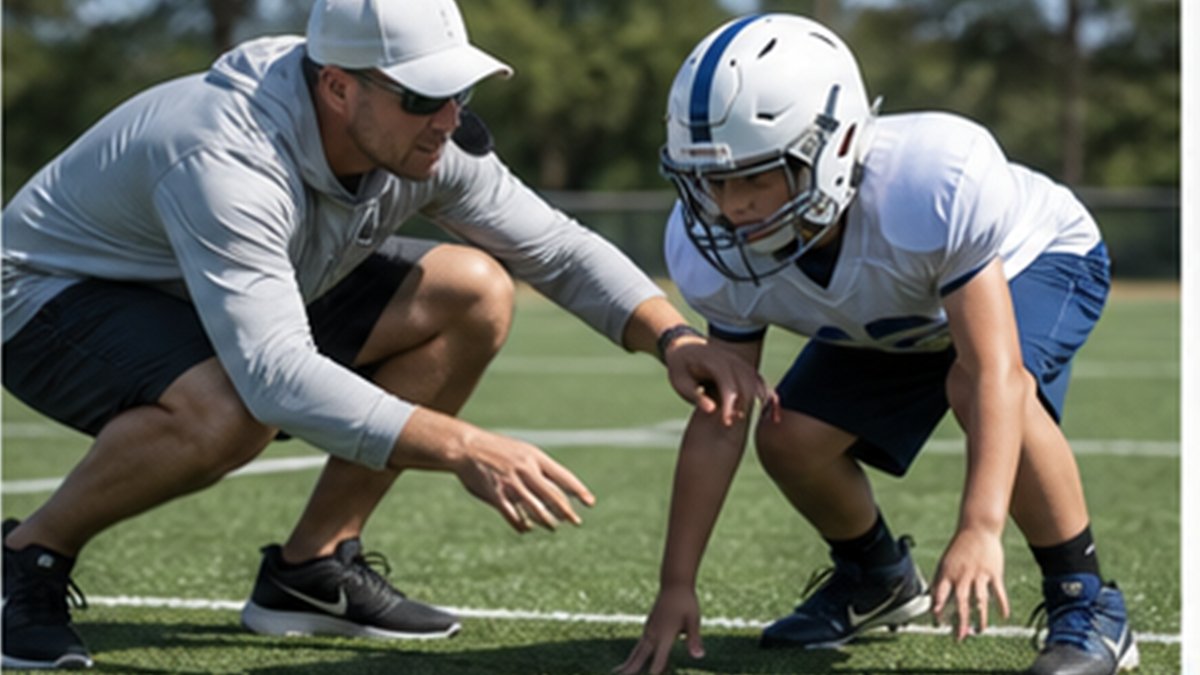
How to Create a Youth Football Practice Plan Players Can Follow
A youth American football practice-planning framework coaches can use to build clearer sessions, save time, and keep players connected to one learning goal.
How to Help Players Read Pressure Before They React
A cross-sport approach to developing decision-making: teaching young athletes to recognize pressure early instead of reacting to it after the fact.
About the author
SportX1 Editorial Team
Coach-reviewed guidance for youth sports learning, player development, team operations, and AI-supported coaching workflows.