

Quick summary
- A jog and static stretch don't prepare young players' bodies for the cutting and sprinting soccer actually demands.
- A short progression through activation, dynamic movement, and ball touches covers far more injury risk in less time.
- Consistency matters more than length: the same 10-12 minute warmup every session builds the protective habit.
Why a Lap Around the Field Isn't a Real Warmup
Definition
Dynamic warmup: A structured sequence of movement-based exercises, done before practice or a game, designed to raise heart rate, activate key muscle groups, and rehearse the cutting and landing patterns players will use.
A slow jog raises heart rate a little, but it does nothing to prepare the hips, ankles, and hamstrings for the sudden direction changes and sprints that cause most youth soccer injuries. Static stretching before activity can also temporarily reduce muscle power, which isn't what a player needs right before sprinting.
The injuries coaches see most in youth soccer, ankle sprains, hamstring strains, and non-contact knee injuries, share a common thread: they usually happen during cutting, landing, or sudden acceleration. A warmup that never rehearses those movements isn't protecting against them.
- Start with light jogging to raise heart rate for two to three minutes.
- Move into dynamic activation for hips, ankles, and hamstrings.
- Finish with soccer-specific movement and ball touches at increasing speed.
The Progression, Phase by Phase
The full progression takes about 10 to 12 minutes and moves from general to specific. Each phase builds on the last, so skipping straight to sprinting without the activation phase undercuts the whole warmup.
Coaches don't need equipment beyond cones to run this every single session, which is what makes it realistic to keep up all season.
| Phase | Duration | Focus |
|---|---|---|
| Raise | 2-3 min | Light jogging and skipping to raise heart rate |
| Activate | 3-4 min | Hip openers, ankle circles, lateral lunges |
| Mobilize | 2-3 min | High knees, butt kicks, carioca, single-leg balance |
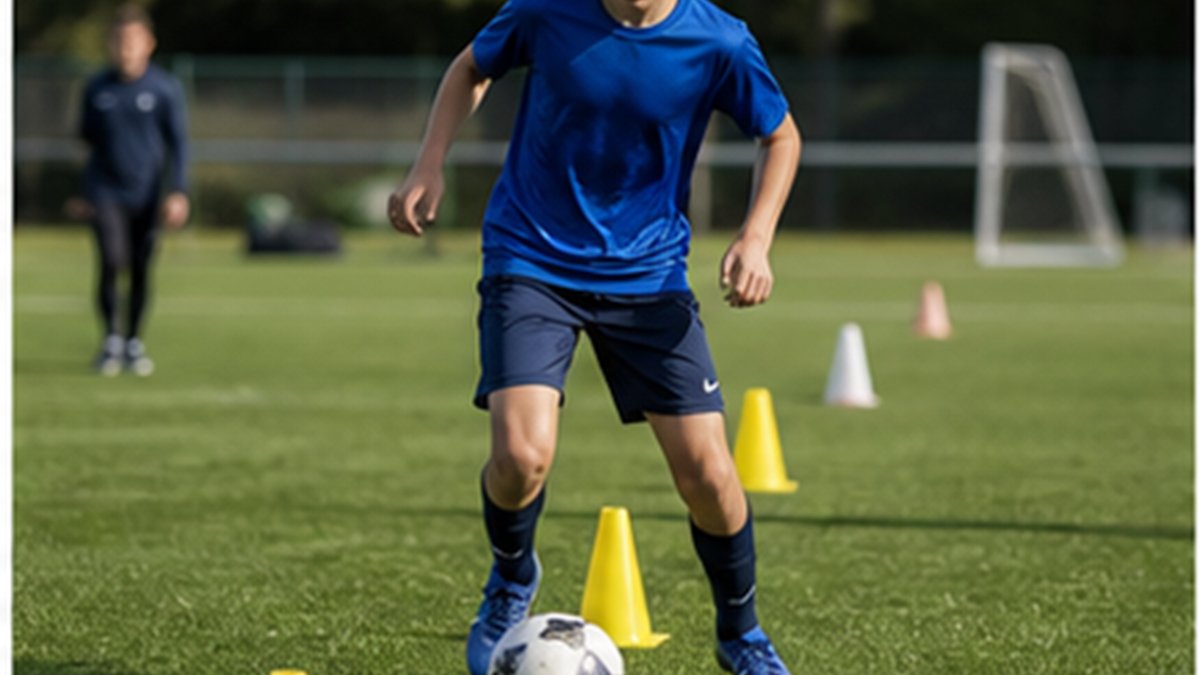
| Ball touches | 3 min | Dribbling through cones at increasing speed, then a few sprints |
Targeting the Injuries Youth Soccer Sees Most
Ankle sprains often happen on landings and quick cuts, so single-leg balance work and lateral movement in the warmup directly rehearse that stability. Hamstring strains cluster around sprinting, especially the first sprint of a session, which is exactly why the ball-touch phase should build up to full speed rather than starting there.
Non-contact knee injuries, including ACL injuries, are linked to landing and cutting mechanics. Programs that include planned landing and deceleration work in the warmup have shown real reductions in these injuries over a season.
- Single-leg balance and ankle circles for ankle stability.
- Progressive-speed sprints, not a first sprint at full speed cold.
- Controlled landing and cutting drills for knee injury risk.
Keeping the Warmup Consistent, Not Just Occasional
The injury-prevention benefit comes from doing the same warmup every session, not from running a special version before tournaments. Players also start running it with less coaching input once it's the same routine every time, freeing up a coach's attention.
A warmup that changes every week never becomes automatic, and it's the automatic, repeated movement patterns that actually build protective strength and control over a season.
The warmup that prevents injuries is the boring, repeated one, not the occasional special one before a big game.
Related SportX1 resources
Frequently asked questions
How long should a youth soccer warmup be?
About 10 to 12 minutes covers a full progression from raising heart rate through activation to soccer-specific movement, which fits into most practice schedules without cutting into training time.
Does this warmup actually reduce injuries, or is it just general conditioning?
Structured warmup programs that include balance, strength, and controlled landing work have been shown in youth sports research to meaningfully reduce ankle, hamstring, and non-contact knee injuries compared to a jog and static stretch.
Should the warmup change for younger age groups?
The structure stays the same, but younger players usually need simpler cues and shorter phases, while older, more physically mature players can handle more sprint and cutting volume in the ball-touch phase.
Build injury-prevention warmups into every plan
Use SportX1 to standardize your warmup progression across every practice and track player readiness over a season.
Related articles

How to Teach Scanning Before Receiving the Ball
A simple soccer progression for helping young players check space, receive with a plan, and make the next pass sooner.

Helping Young Soccer Players Recover From a Mistake Mid-Game
A coaching approach for helping youth soccer players reset mentally after a visible mistake, like a bad touch or a giveaway leading to a goal, instead of letting it snowball into more errors.

How to Structure a Youth Practice Plan Players Can Actually Follow
A practical practice-plan framework for youth coaches: one theme, four blocks, short instructions, and a five-minute review players remember.

About the author
SportX1 Editorial Team
Coach-reviewed guidance for youth sports learning, player development, team operations, and AI-supported coaching workflows.