

Quick summary
- A player's second mistake usually comes from carrying the first one, not from a new lapse in skill.
- Coaches can give players a quick physical reset and a simple next-action cue instead of a long explanation.
- How a coach reacts in the moment teaches players more about handling mistakes than anything said after the game.
Why One Mistake Turns Into Three
Definition
Mistake snowball: A pattern where a player's focus stays on a previous error instead of the current play, leading to a second and often a third mistake in quick succession.
A visible mistake, like a giveaway that leads to a goal, pulls a young player's attention backward right when the game needs their attention forward. The next play arrives in seconds, but the player is still replaying the last one.
This isn't about toughness or mental weakness. It's a normal attention response, and it responds well to a specific, practiced reset rather than being told to simply move on.
What it looks like
A player hesitates on the next ball, makes a rushed decision to compensate, or avoids getting involved in play at all for the next few minutes.
- Hesitation on the next touch
- Overly cautious or overly rushed decisions
- Physically drifting out of the play
Why it happens
Attention stays locked on the error and the emotional reaction to it, leaving less focus available for reading the current play.
- Attention is a limited resource
- Emotion narrows focus onto the past mistake
A Quick Sideline Reset, Not a Long Explanation
In the moment, a long tactical explanation is the wrong tool. A young player mid-game needs something short enough to use immediately, not a breakdown of what went wrong.
A physical cue, like a breath or a quick shake-out, paired with one clear next action, works faster than analysis. Save the deeper conversation for after the game or at the next break in play.
- Get the player's eyes and attention, even just a quick word as play continues.
- Use a short physical cue, like a breath or a reset step, to interrupt the replay loop.
- Give one simple next-action cue, like a specific area to cover or a pass to look for.
Modeling the Response Coaches Want to See
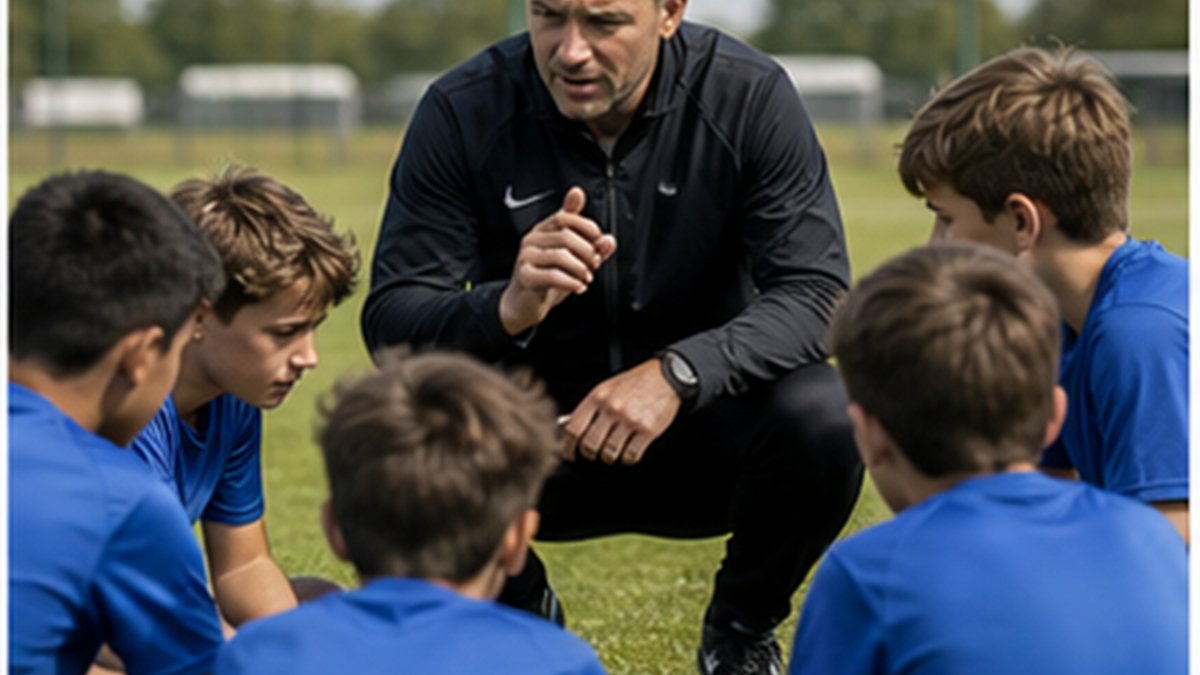
Players read a coach's reaction to a mistake as closely as they read their own performance. A visibly frustrated reaction from the sideline confirms to a player that the mistake was, in fact, a disaster.
A calm, specific response, even a brief one, signals that the game is still going and their job is still to play it. That message often matters more than any tactical correction.
A coach's face after a mistake teaches a player how to feel about mistakes long before any words do.
Building the Reset Into Practice, Not Just Games
Waiting until a game to practice a mental reset means a player is learning it under the highest pressure possible. Coaches can build small mistake-recovery moments into regular training, like continuing a drill immediately after a bad touch rather than stopping to correct it.
Over time, players start applying their own reset without needing a cue from the sideline, which is the actual goal. The habit transfers because it was practiced, not just explained.
- Let small mistakes play through in training instead of stopping every one.
- Praise a quick recovery as much as a good play.
- Use the same short cue words in practice and in games so they're familiar under pressure.
Related SportX1 resources
Frequently asked questions
What should a coach say right after a player makes a costly mistake?
Something short and forward-looking works best, like naming the next specific job on the field. Save any detailed feedback about what went wrong for after the game or a natural break in play.
How can coaches tell if a player is still stuck on a mistake?
Watch for hesitation on the next touch, a player drifting away from the ball, or a rushed, out-of-character decision shortly after the error. These are usually signs the player is still replaying the last play instead of reading the current one.
Does pulling a player out after a mistake help them reset?
Sometimes, especially for a younger or more rattled player, but frequently substituting after every mistake can teach a player that errors are something to be removed for rather than played through. A brief in-game cue is usually the better first option.
Coach the recovery, not just the mistake
Use SportX1 to build composure and mental-game goals into player development plans and track growth over a season.
Related articles

How to Teach Scanning Before Receiving the Ball
A simple soccer progression for helping young players check space, receive with a plan, and make the next pass sooner.
How to Give Youth Athletes Feedback They Actually Use
A practical framework for youth coaches to give feedback that's specific, timely, and short enough for players to remember and apply on the next rep.
Weekly Player Check-Ins That Build Confidence, Not Pressure
A short, repeatable check-in routine youth coaches can use to build player confidence through specific wins instead of generic encouragement.
About the author
SportX1 Editorial Team
Coach-reviewed guidance for youth sports learning, player development, team operations, and AI-supported coaching workflows.