

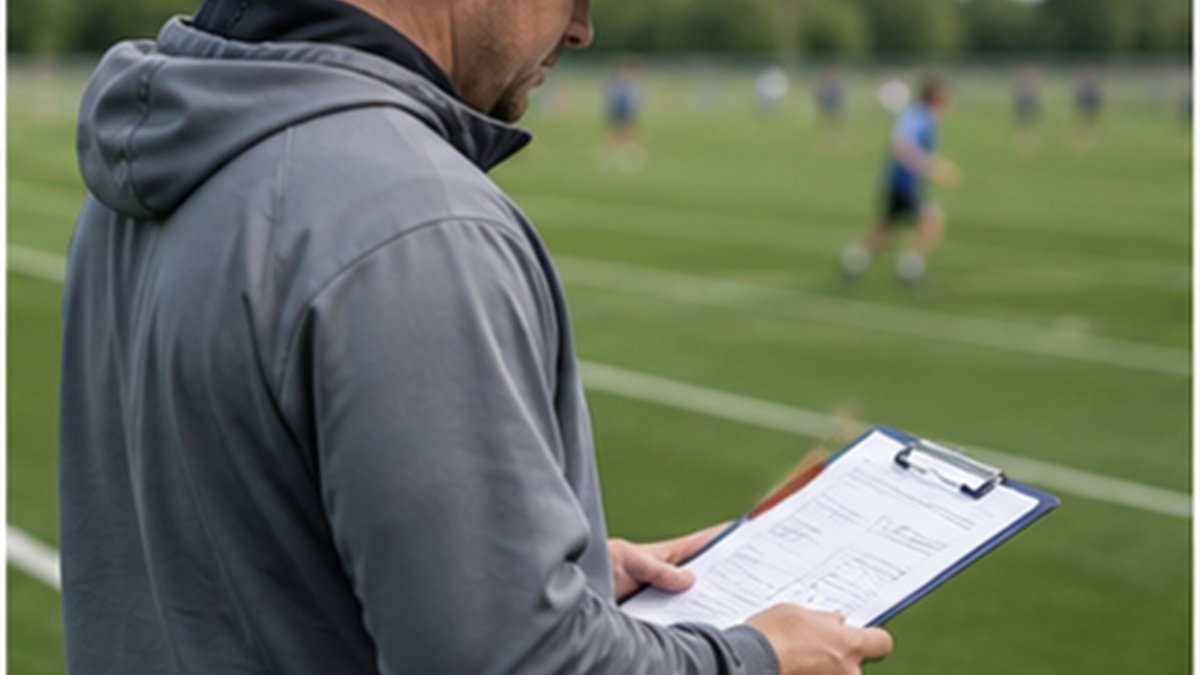
Quick summary
- Feedback works best when it's specific to one moment, not a general comment about effort or attitude.
- Time it right: most players can only absorb feedback right after the rep or at a natural break, not mid-drill.
- Track what you tell each player so the same correction doesn't repeat for three straight weeks.
Make Feedback Specific to One Moment
Definition
Specific feedback: Feedback tied to one observable action a player just took, instead of a general comment about effort, attitude, or ability.
Youth athletes hear a lot of general feedback: good job, work harder, keep your head up. None of it tells them what to repeat or what to change. Feedback becomes useful the moment it points at something the player can picture themselves doing again.
The fastest way to sharpen feedback is to describe the moment before naming the fix. Say what the coach saw, then say the one thing to adjust.
Time Feedback So Players Can Actually Use It
The same feedback lands differently depending on when it's delivered. Mid-drill correction can interrupt a player's rhythm before they've even finished the attempt. A natural break, or the moment right after a rep, usually works better.
Coaches don't need to stop the whole practice to make a point. A short, well-timed sentence during a water break often sticks better than a long explanation mid-rep.
- Let the rep finish before correcting a technical habit.
- Give the feedback within the same drill, while the moment is still fresh.
- Save pattern-level feedback (something happening across several reps) for a scheduled break.
Limit Players to One Correction at a Time
Stacking three corrections into one sentence usually means a player fixes none of them. Pick the correction that matters most for the day's theme and let the others wait.
This does not mean ignoring everything else. It means sequencing corrections so players can actually succeed at each one before moving to the next.
- Choose the correction tied to today's practice theme first.
- Note other habits to revisit next practice instead of stacking them now.
- Confirm the player understood by asking them to repeat the cue back.
A player who fixes one habit this week is easier to coach next week than a player who heard five corrections and changed nothing.
Track What Keeps Coming Up
If a coach is giving the same correction to the same player in week four that they gave in week one, the feedback loop isn't closing. A quick note after practice, even a single line, makes patterns visible that memory alone will miss.
This tracking doesn't need to be complicated. The goal is just enough of a record to notice progress or a stuck habit before the season is half over.
What to jot down after practice
A short note takes less than a minute and pays off over a season.
- The one correction given today
- Whether the player applied it in a game-like moment
- Whether it's the first time or a repeat

Related SportX1 resources
Frequently asked questions
How much feedback should a coach give in one practice?
Enough to reinforce today's theme, not enough to overwhelm. Most players can absorb one or two corrections well in a single session.
Should feedback be different for younger vs older youth players?
Yes. Younger players need shorter, more concrete language, while older players can handle more detail about why a correction matters.
What if a player doesn't respond to feedback right away?
Give it time and stay consistent with the same cue. Some habits take several reps across multiple practices before they show up in a game.
Keep feedback notes where your whole staff can see them
Use SportX1 to log player feedback, track repeat corrections, and connect notes to practice plans.
Related articles

How to Structure a Youth Practice Plan Players Can Actually Follow
A practical practice-plan framework for youth coaches: one theme, four blocks, short instructions, and a five-minute review players remember.

How Visual Cues Help Players Learn Faster
A coach-friendly guide to using cones, demonstrations, freeze moments, and simple cues so young athletes understand what to look for in the next play.

How to Set Player Development Goals for a Youth Team
A simple way to set player development goals that are specific, visible in practice, and easy for players to remember.
About the author
SportX1 Editorial Team
Coach-reviewed guidance for youth sports learning, player development, team operations, and AI-supported coaching workflows.