
Quick summary
- Use one clear cue before each activity so players know what to watch for.
- Stop play only when the moment helps players see space, pressure, or a teammate.
- Turn each cue into an action players can try on the next repetition.
Show the Cue Before the Drill
Definition
Visual cue: A simple signal, shape, or demonstration that helps players understand what to notice before they act.
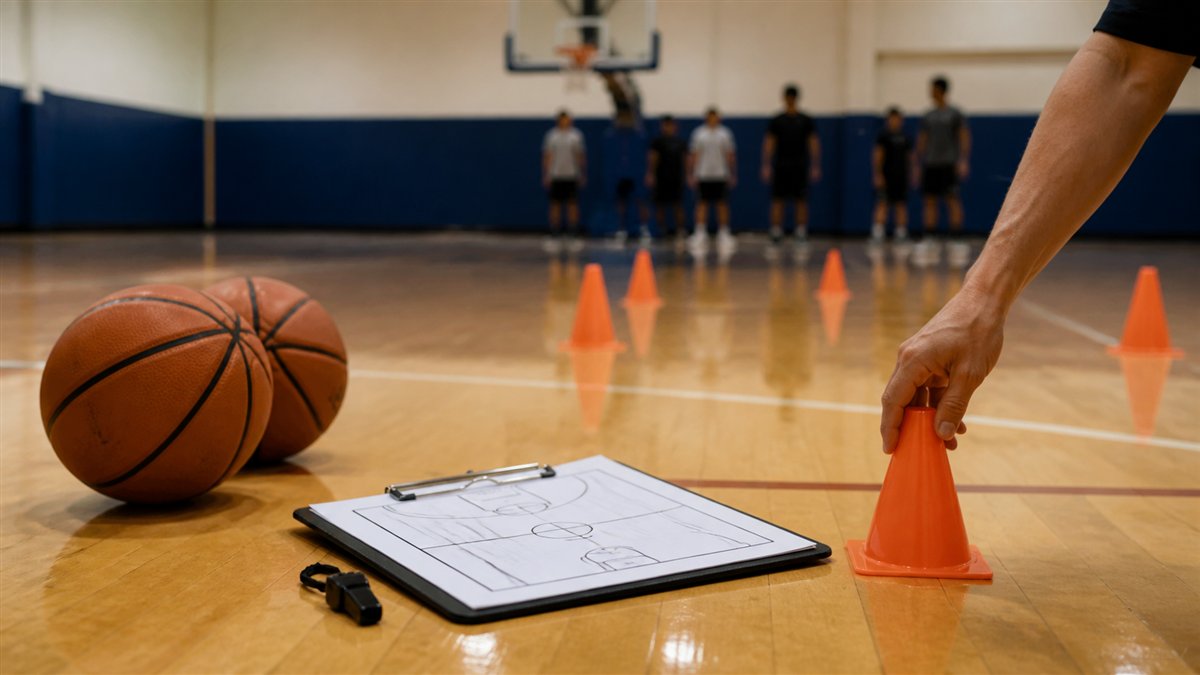
Young athletes often need to see the game picture before the instruction makes sense. A cone gate, a quick demonstration, or a frozen body shape can make the coaching point easier to remember.
Keep the cue tied to the theme of practice. If the session is about passing under pressure, show players the passing lane, the defender's angle, and the support option before the drill starts.
Freeze the Right Moments
Freezing play can help, but only when the pause is short and specific. Stop the action when the picture shows the decision you want players to recognize.
The goal is not to lecture. The goal is to let players see the field or court for a few seconds, answer one question, and try again right away.
- Pause for ten seconds at the moment the choice appears.
- Ask what the player sees: pressure, space, teammate, or goal.
- Restart quickly so the team can repeat the decision at game speed.
A good freeze moment helps players see the next choice, not just hear what went wrong.
Connect Every Cue to an Action
A cue only matters if it changes what the player does next. After the demonstration, give players one action to test immediately.
Use the same cue across the drill and the scrimmage so the learning carries into a real game moment.
- Scan before the pass arrives.
- Open the body toward the next option.
- Move after passing to create support.
- Attack the open space when the defender turns.
| Cue | Coach asks | Player action |
|---|---|---|
| Open body shape | Where can you play next? | Receive across the body |
| Cone passing lane | Is the lane open? | Pass before pressure closes |
| Freeze spacing | Who is free now? | Find the support player |
| Defender angle | Which side is blocked? | Attack the open side |
Related SportX1 resources
Frequently asked questions
What is a visual cue in youth coaching?
A visual cue is something players can see that points them toward the next action, such as body shape, space, pressure, a passing lane, or a coach demonstration.
How often should coaches freeze play?
Use freeze moments sparingly. One or two strong pauses in a practice are usually better than stopping every few minutes.
Do visual cues work for every sport?
Yes. Soccer, basketball, and most team sports all depend on players recognizing space, pressure, timing, and teammate movement.
Turn coaching cues into better practice habits
Use SportX1 to organize themes, drills, and player assignments around the decisions your team needs most.
Related articles
How to Structure a Youth Practice Plan Players Can Actually Follow
A practical practice-plan framework for youth coaches: one theme, four blocks, short instructions, and a five-minute review players remember.
How to Teach Scanning Before Receiving the Ball
A simple soccer progression for helping young players check space, receive with a plan, and make the next pass sooner.
Basketball Drills That Teach Players When to Pass
Three basketball drill formats that teach young players to read help defense, move the ball, and make decisions without freezing.
About the author
SportX1 Editorial Team
Coach-reviewed guidance for youth sports learning, player development, team operations, and AI-supported coaching workflows.