

Quick summary
- Pick one theme for the day so every drill connects to the same learning goal.
- Use four blocks: arrival activity, skill work, decision game, and review.
- Keep coaching language short enough for players to repeat back.
Start With One Coaching Theme
Definition
Coaching theme: The single idea players should recognize, practice, and remember by the end of the session.
A clear practice starts before the first cone is placed. Choose one theme, then let that theme guide your warmup, drill selection, game constraints, and review questions.
For younger teams, a theme can be as simple as receiving with the back foot, moving after a pass, or calling for the ball early. The point is not to cover everything. The point is to make one thing stick.
Make the theme visible
Players learn faster when the same cue appears in more than one activity. Say it in the warmup, ask for it in the drill, and reward it in the game.
- Write the theme in one sentence.
- Choose two coaching cues players can remember.
- Use the same language in every block.
Use a Four-Block Session Shape
Most youth practices work better when the structure is familiar. Coaches can still change the drills, but the rhythm stays the same, which helps players settle in faster.
The four-block format keeps the session moving without turning practice into a lecture.
- Arrival activity: a simple ball-touch or movement task players can join immediately.
- Skill block: isolated enough to teach the technique, but active enough to keep attention.
- Decision game: a small-sided game that forces players to use the skill under pressure.
- Review: two questions and one player takeaway before everyone leaves.
| Block | Purpose | Example | Time |
|---|---|---|---|
| Arrival | Get players moving | Partner passing with two-touch rule | 10 min |
| Skill | Teach the main cue | Receive across the body | 20 min |
| Decision game | Apply the cue | 4v4 to target gates | 35 min |
| Review | Check retention | Players name one cue and one moment | 10 min |
Coach With Short Prompts
Long explanations usually sound clear to the coach and blurry to the player. A better test is whether a player can repeat the instruction while tired.
Use short prompts during the action, then save detailed feedback for natural pauses.
- Scan early.
- Open your body.
- Play the next pass.
- Move after you pass.
If players cannot repeat the cue in their own words, the cue is probably too long.
End With a Player Check
The last five minutes are not filler. They are where a practice becomes something players can carry into the next game.
Ask players what they noticed, where the theme showed up, and what they will try next time. Keep it quick, specific, and connected to the day.
Two questions that work
A short review helps the coach hear what players actually understood instead of guessing from the sideline.
- Where did you use today's cue in the game?
- What will you look for earlier next time?
Related SportX1 resources
Frequently asked questions
How long should a youth practice plan be?
Most youth coaches only need one page: the theme, four blocks, time estimates, coaching cues, and two review questions.
Should every practice include a scrimmage?
Yes, but the scrimmage should connect to the theme. Small-sided games usually create more touches and better decisions than a full-field scrimmage.
How can AI help with practice planning?
AI is useful for first drafts, drill variations, and age-level adjustments. Coaches should still review the plan for safety, field space, player numbers, and team context.
Build your next practice plan with SportX1
Create a structured session, adjust it for your age group, and keep the coaching cues in one place.
Related articles
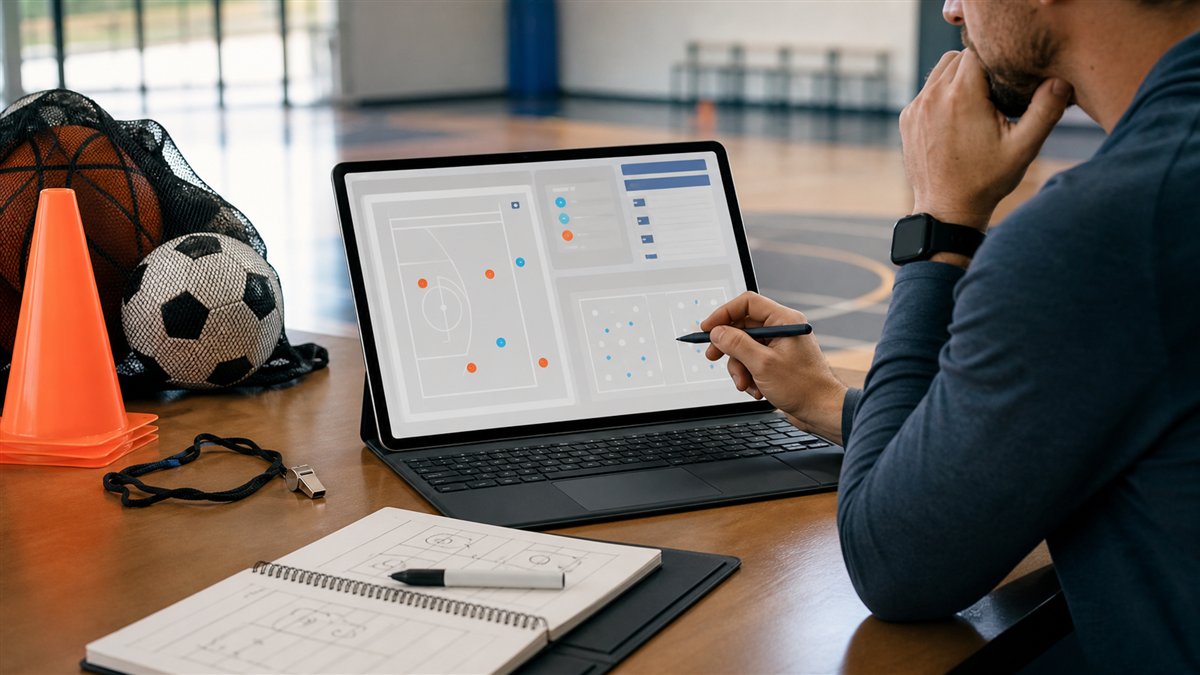
AI Practice Planning Prompts Coaches Can Actually Use
Prompt patterns for creating a useful first draft of a practice plan, then checking it for age level, safety, space, and coaching language.

How to Teach Scanning Before Receiving the Ball
A simple soccer progression for helping young players check space, receive with a plan, and make the next pass sooner.
How to Set Player Development Goals for a Youth Team
A simple way to set player development goals that are specific, visible in practice, and easy for players to remember.
About the author
SportX1 Editorial Team
Coach-reviewed guidance for youth sports learning, player development, team operations, and AI-supported coaching workflows.