

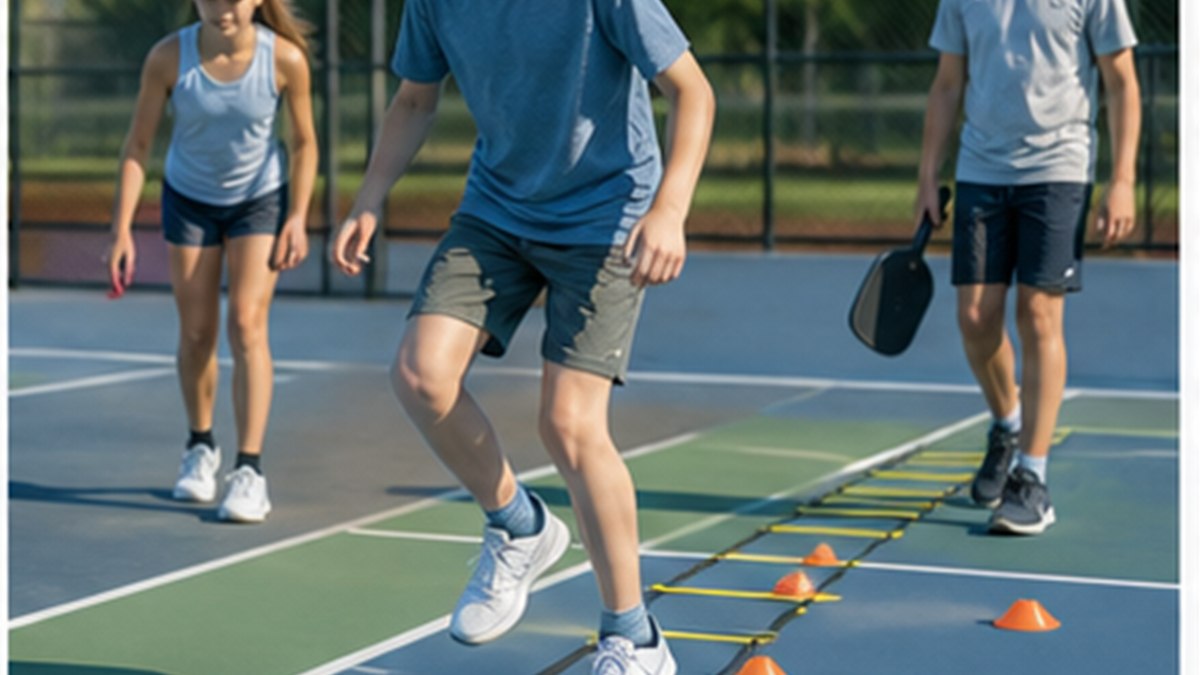
Quick summary
- Most youth pickleball injuries come from predictable habits, like overreaching for wide balls or standing flat-footed at the kitchen line.
- A consistent split step before every opponent contact gives players a balanced base to move from in any direction.
- A short warm-up progression that rehearses these movement patterns is more effective than reminding players mid-game.
Why Footwork Habits Matter for Injury Prevention
Definition
Split step: A small, balanced hop timed to an opponent's contact with the ball, landing with the feet shoulder-width apart so a player can push off quickly in any direction.
Most youth pickleball injuries aren't caused by collisions or bad luck. They come from repeatable habits, like reaching for a wide ball on one leg or standing flat-footed and getting caught leaning the wrong way.
Teaching better footwork early removes the situations that cause these injuries in the first place, rather than just treating them after they happen.
- Ankle rolls often happen when a player lunges sideways from a flat-footed, standing position.
- Overreaching for a wide ball puts a player's weight past their base, with nothing to recover to.
- Fatigue late in a match makes players skip the reset step between points, raising the risk further.
Building a Ready Position That Holds Up
A good ready position gives a young player a stable base to push off from in any direction, which is what actually prevents most rolled ankles and awkward reaches. It starts well before the ball is in the air.
Coaches should check this position often, since it tends to drift back to flat-footed standing once players get tired or distracted.
A low, athletic stance
Knees slightly bent, weight on the balls of the feet, and feet roughly shoulder-width apart gives a player a base they can push off from quickly, in contrast to standing tall and flat-footed.
A controlled recovery step
After reaching for a wide ball, players should be taught to take a small step back toward the center of their coverage area rather than staying stretched out on one leg.
A Simple Warm-Up and Drill Progression
Reminding a player about footwork mid-match rarely works, because the habit has to be automatic before pressure hits. A short warm-up that rehearses the same movement patterns builds that automatic response.
This doesn't need to take long. A few focused minutes before every practice is enough to reinforce the pattern over a season.
- Start with a light dynamic warm-up, including ankle circles and lateral shuffles.
- Add split-step timing drills, having players hop in place on a coach's signal.
- Practice split-stepping on a partner's contact during slow-paced dinking.
- Add a controlled recovery step drill, reaching for a wide ball and stepping back to center.
Coaching Cues That Stick in the Moment
A short cue is easier for a young player to recall in the middle of a rally than a full explanation of proper footwork. Coaches should settle on one or two phrases and repeat them consistently.
Over a season, these small cues reduce the number of awkward, off-balance reaches that lead to most avoidable injuries.
"Ready, then reach" is a simple enough cue that a young player can recall it mid-rally, when a longer explanation would be forgotten.
Related SportX1 resources
Frequently asked questions
What's the most common footwork-related injury in youth pickleball?
Ankle rolls are the most common, usually from lunging sideways off a flat-footed stance rather than pushing off from a balanced ready position.
How often should footwork drills be part of practice?
A few minutes at the start of every session works well, since the habit needs frequent, short reinforcement rather than one long session occasionally.
Is the split step really necessary at slower youth speeds?
Yes. Even at slower speeds, a split step keeps a player balanced and ready to move, and it builds a habit that holds up as their game gets faster.
Build safer movement habits into every practice
Use SportX1 to add footwork and warm-up routines to practice plans and track player readiness over a season.
Related articles
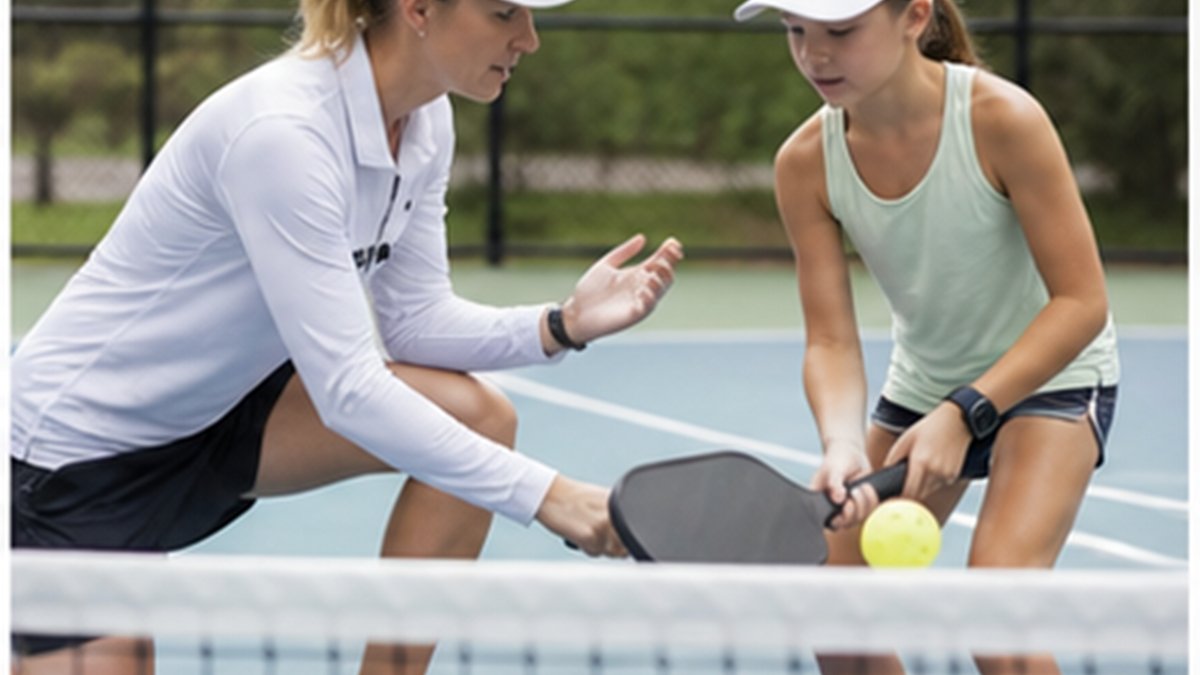
How to Teach Young Players to Win the Kitchen Line With Dinks
A coach-friendly progression for teaching youth pickleball players soft-game control at the kitchen line, instead of relying on power shots alone.
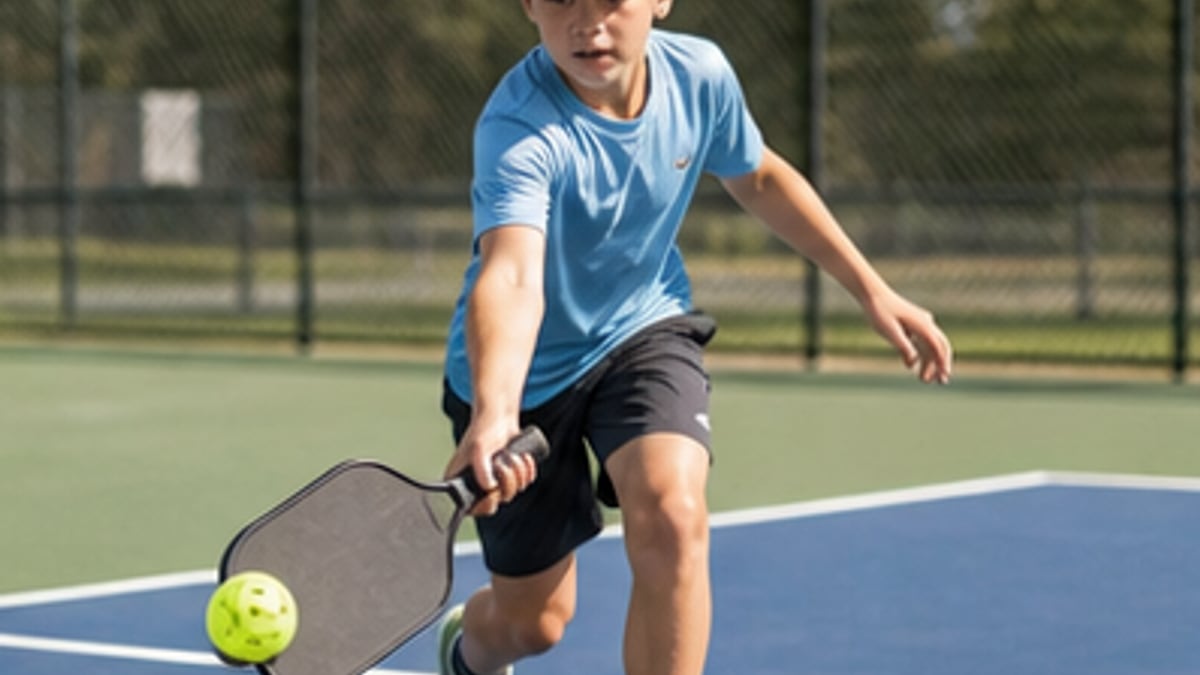
How to Teach a Consistent Third-Shot Drop in Pickleball
A step-by-step approach for teaching young pickleball players the soft, arcing third-shot drop that lets a serving team advance safely to the kitchen line.
How to Track Pickleball Player Development Without Extra Spreadsheets
How youth pickleball coaches can track player growth, skill goals, feedback, and confidence without creating another spreadsheet routine.
About the author
SportX1 Editorial Team
Coach-reviewed guidance for youth sports learning, player development, team operations, and AI-supported coaching workflows.