

Quick summary
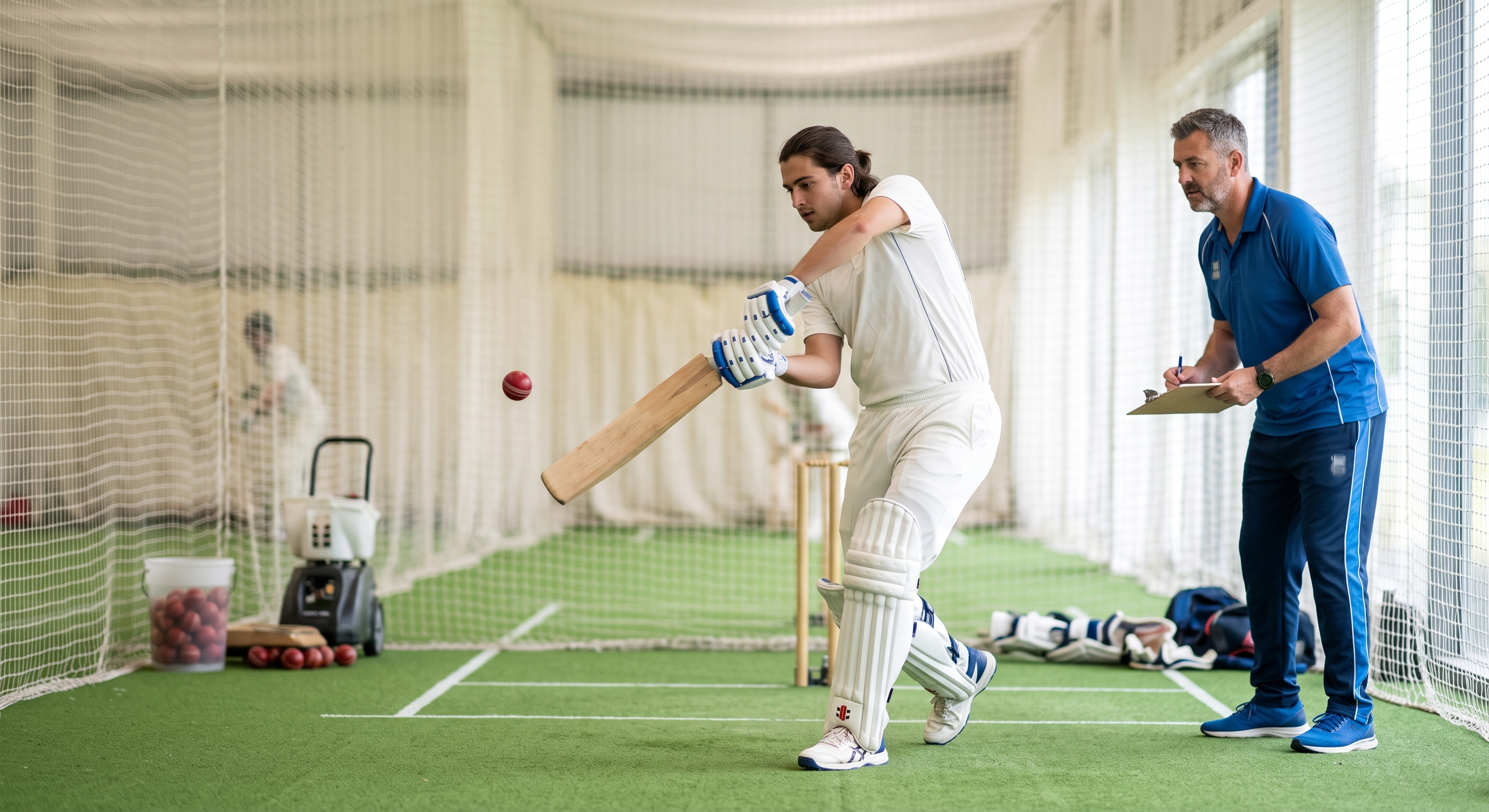
- Feedback in the nets works best when it's tied to one specific ball, not a general comment about the whole session.
- Give feedback between deliveries, not mid-shot, so it doesn't interrupt a player's timing.
- Track patterns across sessions so the same correction doesn't keep repeating without progress.
Make Feedback Specific to One Delivery
Definition
Delivery-specific feedback: Feedback tied to what a player did on one particular ball, instead of a general comment about their batting overall.
Telling a young batter to 'watch the ball' or 'get forward' after a net session sounds helpful but rarely changes anything, because it isn't tied to a moment the player can picture clearly.
Feedback becomes useful the moment it references something specific: the ball they just faced, the shot they just played, and the one thing to adjust next time.
Time Feedback Between Deliveries, Not Mid-Shot
A coach calling out a correction as the ball is being delivered will almost always make things worse, since it pulls a player's attention away from the ball at the exact wrong moment.
The gap between deliveries, while the bowler resets or the machine reloads, is the natural window for a short, specific comment.
- Let the delivery finish completely before saying anything.
- Give one short, specific correction tied to that ball.
- Let the player try the adjustment on the very next delivery, while it's still fresh.
Limit Corrections to One at a Time
A young batter who hears three corrections after one ball will usually apply none of them well. Picking the single most important correction, tied to the day's theme, gives a player an actual chance to succeed at fixing it.
Other habits worth mentioning can wait for the next session rather than being stacked onto the same delivery.
- Choose the correction connected to today's session focus first.
- Note other habits to revisit next session instead of stacking them now.
- Ask the player to repeat the cue back in their own words to confirm it landed.
A player who fixes one habit by the end of the session is easier to coach next week than a player who heard five corrections and changed nothing.
Track What Keeps Coming Up
If a coach is giving the same correction to the same player three sessions in a row, the feedback loop isn't closing. A short note after each session, even a single line, makes that pattern visible before it becomes a habit that's hard to unlearn.
This doesn't need to be complicated. The goal is just enough of a record to notice whether a correction is sticking or quietly repeating.
Related SportX1 resources
Frequently asked questions
How much feedback should a coach give during one net session?
Enough to reinforce the day's theme, not so much that a player is thinking about five things at once. One or two corrections per player per session is usually plenty.
Should feedback be different for younger vs older youth players?
Yes. Younger players need shorter, more concrete language, while older players can usually handle a bit more detail about why a correction matters.
What if a correction doesn't stick after several sessions?
Consider whether the correction is being explained the same way every time, and whether it's realistic for the player's current stage of development, before assuming it's a focus problem.
Keep batting feedback consistent across your coaching staff
Use SportX1 to log player feedback, track repeat corrections, and connect notes to net session plans.
Related articles

Teaching a Balanced Batting Stance Young Cricketers Can Trust
A simple approach to teaching young cricketers a balanced, repeatable batting stance and ready position that holds up against real bowling.
How to Give Youth Athletes Feedback They Actually Use
A practical framework for youth coaches to give feedback that's specific, timely, and short enough for players to remember and apply on the next rep.
How to Structure a Youth Cricket Net Session So Every Player Gets Quality Reps
A practical way to structure youth cricket net sessions so players rotate through batting, bowling, and fielding without long stretches of standing around.

About the author
SportX1 Editorial Team
Coach-reviewed guidance for youth sports learning, player development, team operations, and AI-supported coaching workflows.