

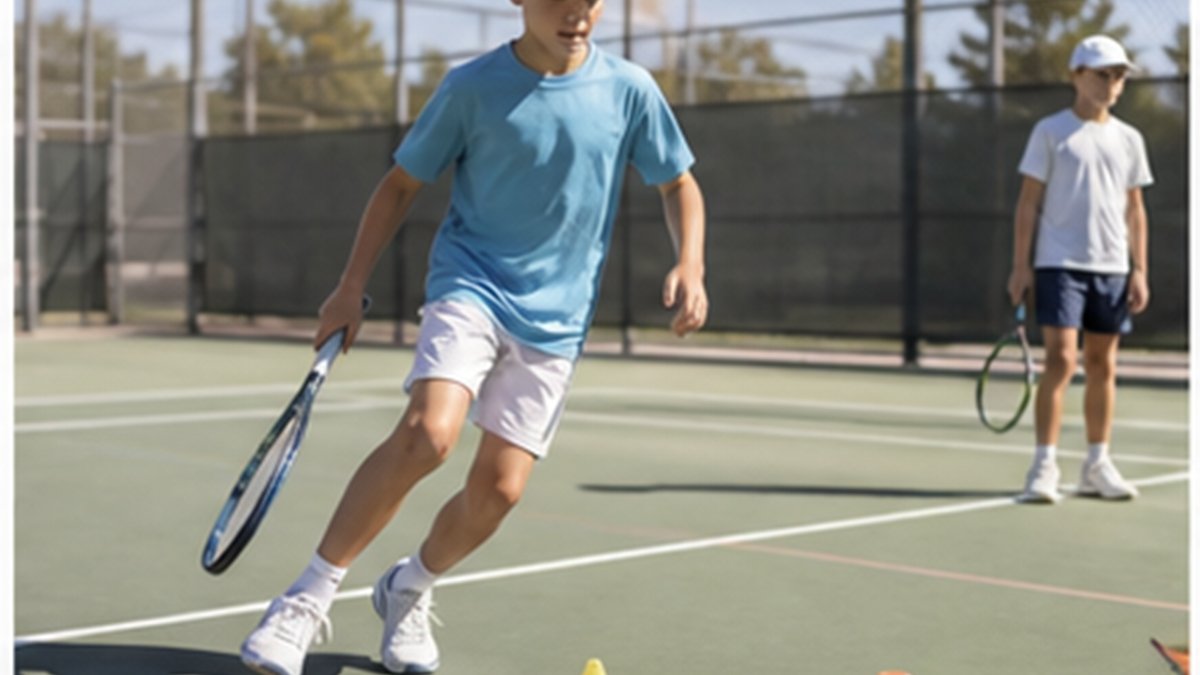
Quick summary
- The split-step is a timing skill, not a footwork pattern, which is why it's one of the hardest habits to teach.
- Most young players either skip it entirely or time it too late to help.
- Build the habit with slow, exaggerated reps before adding it to live rallies.
The Split-Step Is a Timing Skill, Not a Footwork Pattern
Definition
Split-step: A small hop timed to land just as the opponent makes contact with the ball, putting a player's weight on the balls of their feet and ready to move in any direction.
Coaches often describe the split-step as a footwork pattern, but the harder part for young players is the timing, not the hop itself. Landing too early or too late defeats the purpose entirely.
This is why simply telling a player to split-step rarely works. The cue has to be tied to a moment they can actually see: the opponent's contact with the ball.
Build the Habit With Slow, Exaggerated Reps First
Like any timing skill, the split-step is easier to learn slow before it's asked to happen at full speed. Start with reps where the player can see the moment of contact clearly and has time to think about the hop.
- Shadow reps: player watches a coach's racket swing and split-steps on contact, no ball involved.
- Fed balls: player split-steps as a coach feeds a ball, with enough time to focus purely on timing.
- Live rally: the split-step gets folded into normal point play once the timing is consistent.
| Stage | Setup | Focus |
|---|---|---|
| Shadow reps | No ball, coach swings | Learning to watch the racket, not the ball |
| Fed balls | Coach feeds at a controlled pace | Timing the hop to contact |
| Live rally | Normal point play | Making the habit automatic under pressure |
Watch for the Two Most Common Timing Mistakes
Most players who struggle with the split-step fall into one of two patterns: they hop too early, before the opponent has actually hit the ball, or they never land in time to move explosively.
Both mistakes usually come from watching the wrong thing. Players should be watching the opponent's racket, not guessing based on where they expect the ball to go.
- Watch the opponent's racket face, not the ball, for the timing cue.
- Land on the balls of the feet, not flat, to stay ready to move.
- Keep the hop small. A big jump costs more time than it saves.
If a player is still standing flat-footed when the ball crosses the net, the split-step happened too early, too late, or not at all.
Make It Automatic Before Match Play
The split-step should never be something a player consciously thinks about mid-point. That only happens through enough repetition that it becomes automatic, the same way a good grip change becomes automatic over time.
Revisit the shadow-rep stage occasionally, even with older players, if the habit starts to fade during a busy match schedule.
Related SportX1 resources
Frequently asked questions
What age should players start learning the split-step?
Most players can start around age 9 or 10, once they're comfortable with basic court movement and ready-position footwork.
Should the split-step look the same on every shot?
The timing cue stays the same, but the size of the hop may shrink for quick exchanges at the net and grow slightly for deeper baseline rallies.
How long does it take to become a habit?
With regular reps built into warmups, most players start showing it consistently within a few weeks.
Turn footwork habits into a weekly practice focus
Use SportX1 to plan footwork progressions and track which habits are becoming automatic for each player.
Related articles
How to Track Tennis Player Development Without Extra Spreadsheets
How youth tennis coaches can track player growth, skill goals, feedback, and confidence without creating another spreadsheet routine.
How to Create a Youth Tennis Practice Plan Players Can Follow
A youth tennis practice-planning framework coaches can use to build clearer sessions, save time, and keep players connected to one learning goal.
How to Help Players Read Pressure Before They React
A cross-sport approach to developing decision-making: teaching young athletes to recognize pressure early instead of reacting to it after the fact.
About the author
SportX1 Editorial Team
Coach-reviewed guidance for youth sports learning, player development, team operations, and AI-supported coaching workflows.