


Quick summary
- Safe tackling starts with shoulder-leading form, not raw aggression, and coaches should teach it that way from day one.
- A structured progression from air drills to bags to thud to live contact lets players build the habit before speed and contact get added.
- Coaches who slow down the teaching sequence see fewer bad-form tackles once games get fast.
Why Shoulder-Leading Form Comes Before Aggression
Definition
Shoulder-leading tackle: A tackling technique where the player leads with the shoulder and wraps with the arms, keeping the head up and to the side of the ball carrier rather than using the head as the point of contact.
Youth coaches often default to teaching tackling as an attitude: hit hard, wrap up. That approach skips the technical foundation a young player needs before contact speed increases, and it's exactly how bad habits get built early.
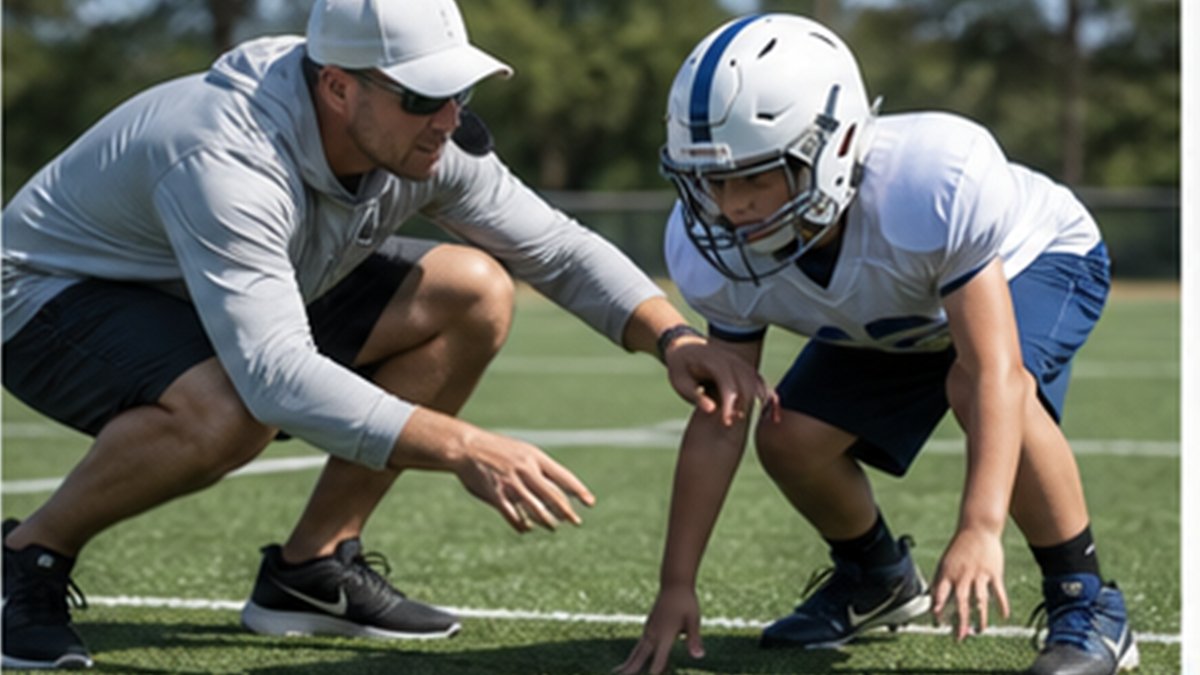
Shoulder-leading form asks a player to make a specific, repeatable decision on every tackle: get the head up and to the side, and make first contact with the shoulder, not the head. Teaching that decision-making process matters more in year one than teaching a player to hit harder.
A player who tackles with good form at half speed will keep that form when the game speeds up. A player who never learned the form just hits harder and less safely.
The Heads-Up Checkpoints Every Rep Should Include
Breaking tackling form into checkpoints gives coaches something concrete to correct instead of vague feedback like 'better technique.' Each checkpoint should be visible from the sideline in real time, without slowing the drill down to explain it.
Coaches should call out the checkpoint by name during reps, not just after them. Naming the fault in the moment, like 'eyes up' or 'wrap and drive,' builds the correction into the player's memory of the rep itself.
- Eyes up and head positioned to the side, never down or leading.
- Contact made with the shoulder, chest driving through the ball carrier.
- Arms wrap and squeeze around the legs or torso immediately after contact.
- Feet stay driving through contact instead of stopping at first hit.
Progressing From Air to Bag to Thud to Live
Live contact should be the last step in a tackling progression, not the first. Each stage removes one variable, letting a player master form before speed, resistance, or an unpredictable opponent gets added back in.
Skipping stages to save practice time usually costs more time later, once a coach has to unlearn a bad habit that never should have formed. The four-stage progression below takes longer up front but pays off across a season.
- Air: player rehearses the full tackle motion with no partner, focusing purely on form.
- Bag: player tackles a stationary or gently moving bag, adding contact without an opponent reacting back.
- Thud: player tackles a partner at reduced speed, making contact but not driving through or taking the partner to the ground.
- Live: full-speed tackling in a controlled, whistle-stopped setting once form holds up at the first three stages.
Structuring Weekly Reps So Contact Stays Controlled
A team that only practices tackling once a week, right before a game, tends to over-correct with more contact than necessary. Spreading shorter tackling segments across multiple practice days keeps reps high without raising overall contact exposure.
Coaches should track which stage each position group is working at, not just run every group through the same progression at the same pace. Skill players and linemen often need different amounts of time at the bag and thud stages.
| Practice Day | Primary Focus | Contact Level |
|---|---|---|
| Day 1 | Form review and checkpoints | Air only |
| Day 2 | Bag work, angle tackling | Bag |
| Day 3 | Partner thud reps | Thud |
| Day 4 (game week) | Light live review, walkthrough | Thud or none |
Related SportX1 resources
Frequently asked questions
At what age should youth football players start learning live tackling?
Most youth leagues introduce controlled live tackling around age 9 to 10, and only after a player can consistently show good form in air, bag, and thud stages.
How much practice time should go toward tackling drills each week?
Roughly 15 to 20 minutes total works well, spread across shorter segments on multiple days rather than one long block right before a game.
What's the most common form mistake coaches see in youth tacklers?
Leading with the head and eyes down instead of up and to the side, usually because the player is focused on the ball carrier's legs rather than the checkpoint form.
Build safer tackling progressions into every practice
Use SportX1 to plan tackling progressions, track which stage each player is ready for, and keep contact controlled across the week.
Related articles
How to Teach Youth Football Players to Read Their Keys Before the Snap
A simple way to teach young football players what to look for before the snap, so decisions on the field come from recognition instead of guessing.

Building a Concussion-Aware Practice Culture in Youth Football
How coaches can limit live-contact exposure, encourage honest symptom reporting, and keep parents and athletic trainers in the loop all season.
How to Create a Youth Football Practice Plan Players Can Follow
A youth American football practice-planning framework coaches can use to build clearer sessions, save time, and keep players connected to one learning goal.

About the author
SportX1 Editorial Team
Coach-reviewed guidance for youth sports learning, player development, team operations, and AI-supported coaching workflows.