

Quick summary
- A quick-release wrist shot depends on weight transfer from the back foot to the front foot, not a bigger backswing.
- Most youth shooting mistakes trace back to arm-only mechanics or a follow-through that stops right at the puck.
- Isolating the weight shift in dry-land reps before adding a puck builds the habit faster than repetition alone.
What a Quick-Release Wrist Shot Actually Is
Definition
Quick-release wrist shot: A wrist shot where the puck leaves the blade in one continuous motion, using weight transfer and stick flex instead of a big windup, so a shooter can score before a goalie is set.
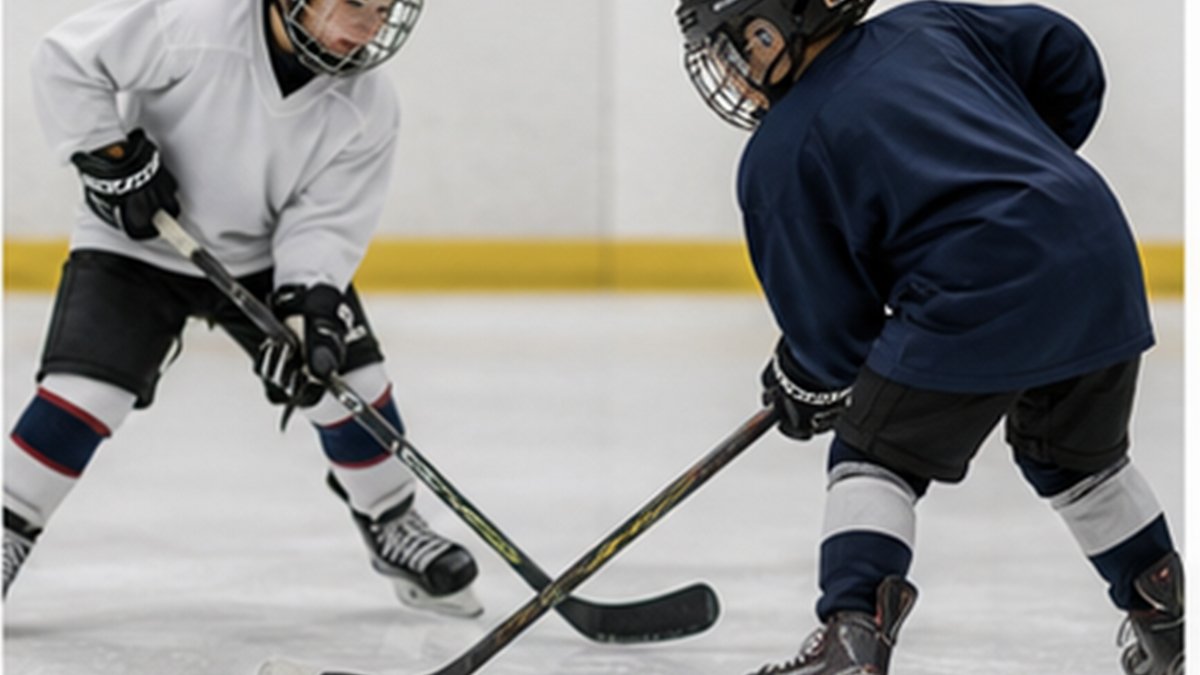
Young players often think a harder shot comes from a bigger backswing, so they wind up like they're taking a slap shot. That extra motion telegraphs the shot to the goalie and slows down the release, which matters more than raw velocity for most youth-level scoring chances.
A quick-release wrist shot starts with the puck already cupped on the blade and ends almost as soon as it begins. The power comes from shifting weight from the back foot to the front foot, not from how far the stick travels before contact.
- Start with the puck slightly behind the back foot, blade cupped over it.
- Shift weight from the back leg to the front leg as the stick sweeps forward.
- Roll the wrists over the puck at release to snap it off the blade.
- Follow through toward the target, pointing the stick blade where the shot should go.
Common Mistakes That Slow the Release
The most common issue in youth wrist shots is a player shooting entirely with their arms, leaving their weight on the back foot. Without that forward weight transfer, the shot looks fast but carries little power and often floats high.
Another frequent mistake is stopping the stick right at the puck instead of following through toward the target. A shot that ends at contact loses both accuracy and the extra whip a full follow-through adds.
| What Coaches See | Likely Cause | Quick Fix |
|---|---|---|
| Puck floats high with little power | Weight stays on the back foot | Cue a step or weight shift toward the front foot |
| Shot is accurate but slow to release | Puck starts too far forward on the blade | Move the puck back near the back foot before the sweep |
| Shot sails wide of the target | Stick stops right at contact | Add a follow-through pointing at the target |
Drills That Build the Weight-Transfer Habit
Isolating the weight transfer away from the puck first can help players feel the motion without worrying about accuracy. A simple step-and-shift drill, done without a puck, lets a coach check that the front knee is bending and the hips are opening toward the target.
Once the movement feels natural, add a stationary puck and a small target area, like a water bottle in a corner. Repetition against a real target is what turns the mechanics into something a player can trust in a game.
- Dry-land step-and-shift reps without a puck to isolate the weight transfer.
- Stationary wrist shots at a small target, not just the open net.
- Add a passer feeding pucks to build release speed off a moving puck.
- Track fifty reps per practice rather than chasing a single hard shot.
Coaching Cues That Actually Change the Shot
Telling a young player to shoot harder rarely changes anything, because it doesn't point to a specific movement to fix. Cues tied to a body part or a feeling, like weight shift or wrist roll, give players something concrete to adjust between reps.
Video, even a short phone clip, can also help here since players often can't feel where their weight is during a fast motion. Comparing a clip against a slow-motion demonstration is usually more useful than another verbal correction.
A quick-release wrist shot is a weight-transfer skill first and a wrist skill second. Fix the weight shift before worrying about how hard the puck leaves the blade.
Related SportX1 resources
Frequently asked questions
What age should coaches start teaching a proper wrist shot?
Most youth players can start working on weight transfer and follow-through around age 7 or 8, once they can balance on skates while shifting their weight forward.
How many shots should a young player take per practice?
Forty to sixty focused reps at a target is usually more useful than a couple hundred shots taken carelessly at an open net.
Does stick flex matter for youth players?
Stick flex helps at older ages and higher shot speeds, but for most youth players weight transfer and a clean release matter far more than stick selection.
Turn wrist shot reps into a tracked skill
Use SportX1 to plan shooting stations, log reps, and connect shot mechanics to player development goals.
Related articles
Simple Edge-Work Drills That Build Skating Confidence
A youth hockey coach's guide to teaching edge control through simple, repeatable drills that build the skating foundation everything else depends on.
Teaching Youth Hockey Players to Support the Puck Carrier
How youth hockey coaches can teach players to support the puck carrier with give-and-go timing and passing-lane positioning instead of chasing the puck as a group.
How to Track Ice Hockey Player Development Without Extra Spreadsheets
How youth ice hockey coaches can track player growth, skill goals, feedback, and confidence without creating another spreadsheet routine.
About the author
SportX1 Editorial Team
Coach-reviewed guidance for youth sports learning, player development, team operations, and AI-supported coaching workflows.