

Quick summary
- Course management starts with knowing a player's real miss, not their best shot on a good day.
- Target selection matters more than club selection for most junior scoring problems.
- Decision-making has to be practiced deliberately, or it won't show up when it matters on the course.
Why Course Management Moves the Needle Faster Than Swing Speed
Definition
Course management: The set of decisions a golfer makes before and during a shot, like target selection, club choice, and risk assessment, separate from the swing mechanics used to execute it.
Junior golfers often assume lower scores come from a better swing. In reality, a lot of strokes are lost to decisions, not contact, like a player choosing a pin four yards from a hazard instead of the safe middle of the green.
Coaches can lower scores meaningfully by teaching decision-making, often faster than a swing change would.
- A bogey from the center of the green beats a double bogey from a bailed-out approach.
- Most strokes lost to bad decisions happen on approach and tee shots, not putting.
- Smart targets reduce the number of recovery shots a round requires.
Start With the Player's Real Miss, Not Their Best Shot
Every player has a miss pattern, whether that's a shot that leaks right under pressure or a tendency to come up short with longer clubs. Course management only works if it's built around that real pattern, not the shot a player hits on their best range day.
Coaches can help players map this out honestly, which usually takes a few rounds of simple tracking.
- Track where shots miss over a few rounds, not just whether they were good or bad.
- Identify the one or two clubs or situations where the miss shows up most.
- Use that pattern, not hope, to pick targets going forward.
Picking Targets Instead of Pins
Young players often aim at the flag out of habit, even when the smarter play is the center of the green. Coaches can reframe target selection as picking the spot that turns a bad shot into a manageable one, not just the shortest putt.
This is easiest to teach hole by hole, comparing what a confident player would do against what a smart player would do.
| Situation | Smart Play | Risky Play |
|---|---|---|
| Pin cut close to a hazard | Aim for the center of the green | Fire directly at the flag |
| Narrow fairway with trouble on the miss side | Club down for accuracy off the tee | Hit driver for extra distance |
| Approach from an awkward lie | Advance the ball to a safe spot | Attempt the hero shot to the green |
Practicing Decisions, Not Just Shots
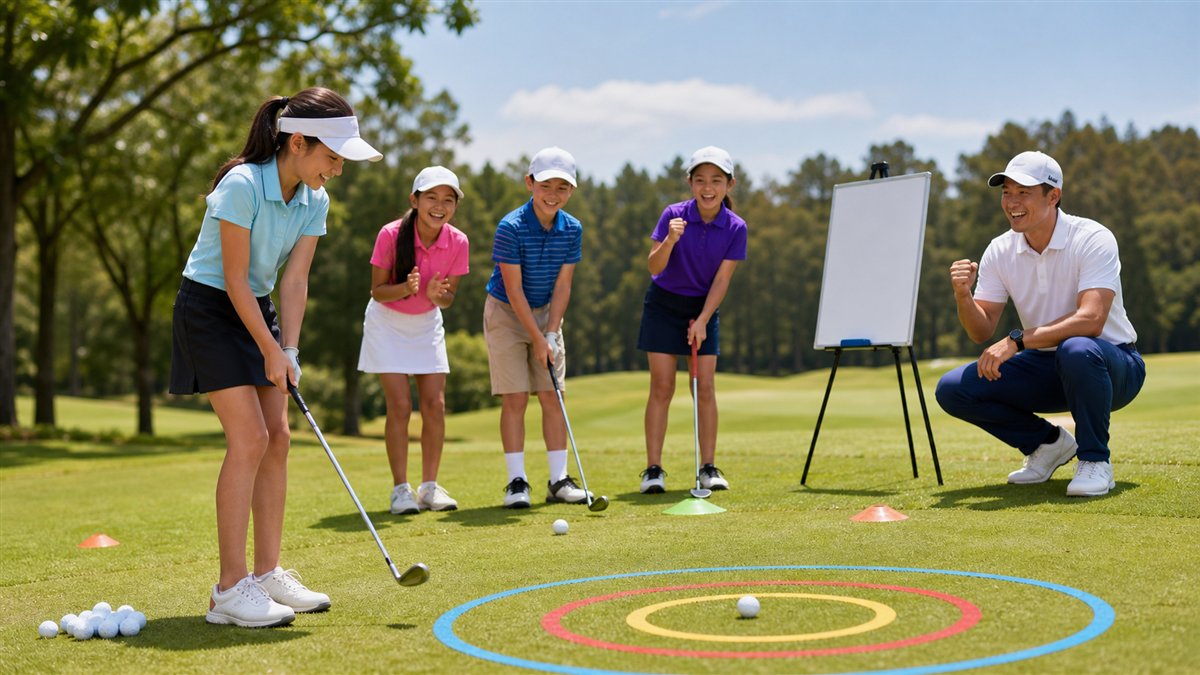
Range time trains contact, but it rarely trains decision-making, because every shot from the same spot looks the same. Course management needs practice that varies the situation, not just the target.
Simple on-course games, like awarding points for smart misses instead of only good shots, can build this habit without slowing practice down.
A player who hits a smart bogey from the fairway is playing better golf than one who hits a lucky birdie from the trees. The scorecard doesn't show the difference, but the next round usually does.
Related SportX1 resources
Frequently asked questions
At what age can junior golfers start learning course management?
Most players can start once they're consistently getting the ball airborne with several clubs, often around age 9 or 10, starting with simple choices like center-of-green targets.
Should junior golfers always lay up short of hazards?
Not always, but it should be the default choice until a player has shown, through tracked results, that the aggressive play pays off more often than it costs.
How can coaches practice course management without a full round?
Simple on-course or short-course games that reward smart target selection, not just ball-striking, work well in a single practice session.
Track decisions, not just scores
Use SportX1 to log miss patterns and target choices so course management becomes a habit players carry into every round.
Related articles
How to Build a Pre-Shot Routine Young Golfers Will Actually Use
A simple, repeatable pre-shot routine junior golf coaches can teach so young players carry the same steps from the range to the course.

How to Teach a Grip and Setup Junior Golfers Won't Abandon Under Pressure
A coaching approach to grip and setup that junior golfers can hold onto on the course, not just on the range, so the fundamentals survive nerves and bad shots.
How to Create a Youth Golf Practice Plan Players Can Follow
A youth junior golf practice-planning framework coaches can use to build clearer sessions, save time, and keep players connected to one learning goal.
About the author
SportX1 Editorial Team
Coach-reviewed guidance for youth sports learning, player development, team operations, and AI-supported coaching workflows.