

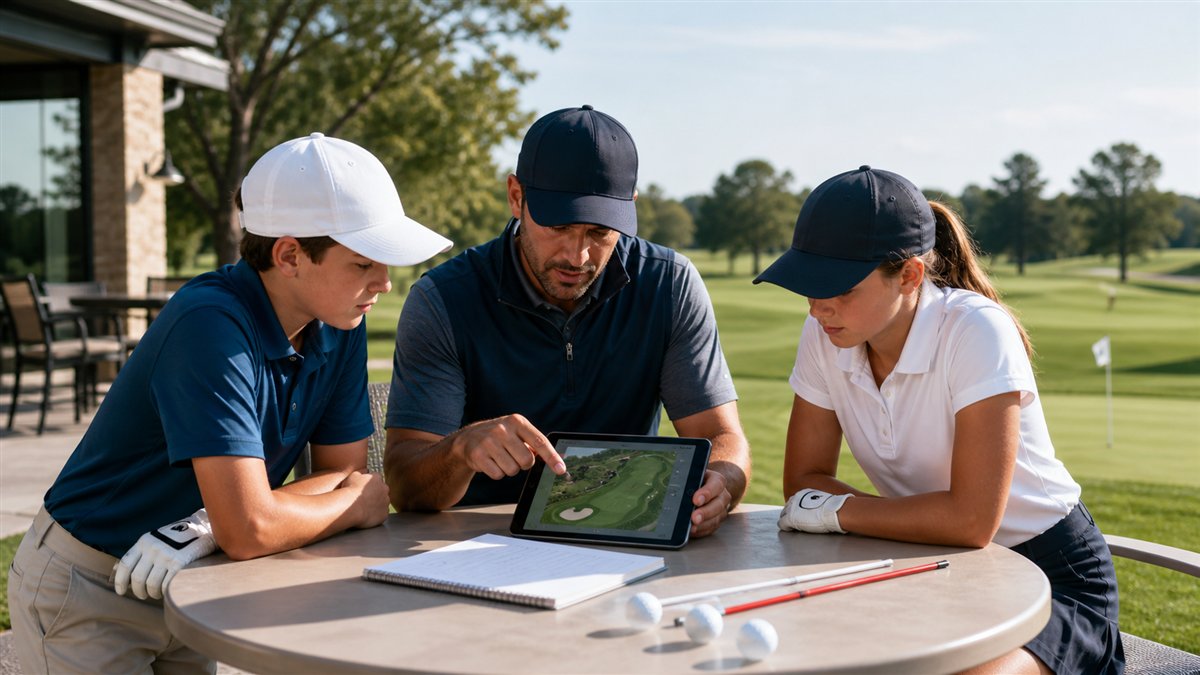
Quick summary
- Short game gets skipped by default unless a practice plan protects time for it every week.
- Splitting the week by putting, chipping, and pitching works better than one long, unfocused block.
- A plan is only useful if it's checked against what actually happened, not just what was scheduled.
Why Short Game Gets Skipped by Default
Definition
Short game: Shots played from roughly 100 yards and in, including putting, chipping, and pitching, that account for a large share of scoring for most golfers regardless of skill level.
Full swing practice is more fun for most junior golfers, and it's easier for a coach to see progress in a straighter drive than in a tighter chip. Left unplanned, a practice session drifts toward the driving range almost every time.
The math doesn't support that drift. Most golfers, juniors included, take more strokes inside 100 yards than they do off the tee, which makes short game the higher-leverage place to spend limited practice time.
- Short game shots make up a large share of total strokes in a typical junior round.
- Improvement in short game often shows up in scores faster than swing changes do.
- Without a plan, practice time defaults to whatever feels most fun that day.
Splitting the Week Across Putting, Chipping, and Pitching
A single long short game session tends to blur together, with a player drilling one shot type well past the point of benefit. Splitting short game across the week keeps each session focused and easier to plan around.
The exact split depends on a player's weaknesses, but a simple rotation works as a starting structure for most junior golfers.
| Day | Focus | Approx. Time |
|---|---|---|
| Monday | Putting, distance control | 20-25 min |
| Wednesday | Chipping, varied lies | 20-25 min |
| Friday | Pitching, distance and trajectory | 20-25 min |
Structuring a Single Short Game Block
Even a well-placed block of practice time can turn into aimless repetition without a bit of structure. A short game block works best when it moves from a technical warm-up into something that resembles an actual on-course shot.
This keeps the block from becoming either mindless repetition or, at the other extreme, entirely random shots with no technical grounding.
- Start with a short technical warm-up, like a putting gate drill or a chipping ladder, for five to ten minutes.
- Move into varied, game-like shots from different lies and distances.
- Finish with a scoring or pressure game, like up-and-down challenges, to close the block.
Keeping the Plan Honest Over a Season
A practice plan written once at the start of the season rarely survives contact with a busy schedule. Short game time is usually the first thing to get cut when a session runs long or a player wants extra range time.
Checking the plan against what actually happened, even briefly, keeps short game from quietly disappearing over a few months.
If a coach can't say how much short game time a player got last week, it's a good bet the plan isn't being followed. That's worth checking before assuming the plan itself is the problem.
Related SportX1 resources
Frequently asked questions
How much of a junior golfer's practice time should go to short game?
A common starting point is roughly half of total practice time, adjusted based on where a player is actually losing strokes.
How many days a week should short game be practiced?
Two to three focused sessions a week, even at 20 to 25 minutes each, tend to build more consistent skill than one long weekend session.
How can a coach tell if the balance is off?
If a player's scores from inside 100 yards aren't improving despite a full-swing focus in practice, that's usually a sign short game needs more scheduled time.
Protect short game time every week
Use SportX1 to build weekly practice plans that keep putting, chipping, and pitching from losing time to the driving range.
Related articles
How to Build a Pre-Shot Routine Young Golfers Will Actually Use
A simple, repeatable pre-shot routine junior golf coaches can teach so young players carry the same steps from the range to the course.

How to Teach a Grip and Setup Junior Golfers Won't Abandon Under Pressure
A coaching approach to grip and setup that junior golfers can hold onto on the course, not just on the range, so the fundamentals survive nerves and bad shots.
How to Create a Youth Golf Practice Plan Players Can Follow
A youth junior golf practice-planning framework coaches can use to build clearer sessions, save time, and keep players connected to one learning goal.

About the author
SportX1 Editorial Team
Coach-reviewed guidance for youth sports learning, player development, team operations, and AI-supported coaching workflows.