
Quick summary
- Incidental body contact happens well before checking is formally introduced, so positioning habits should start earlier too.
- Angling, using skating position instead of force to cut off an opponent, is the single most useful early contact skill.
- Staying square with the head up along the boards reduces injury risk far more than reacting to contact after it happens.
What Body Contact Means Before Checking Begins
Definition
Body contact: Incidental, controlled contact that happens while battling for position or the puck, using angling and body positioning rather than a deliberate hit, which comes before checking is formally introduced at older age levels.
Many youth hockey associations don't introduce full checking until players reach an older age division, but incidental contact happens well before that, along the boards and in puck battles. Teaching players how to handle that contact safely is foundational work, not something to defer until checking officially starts.
Body contact habits built early, like angling an opponent away from the puck instead of skating straight at them, reduce injury risk and make the eventual transition to checking smoother. A player who already understands positioning has less to learn when contact becomes intentional.
- Angling: steering an opponent away from the puck using body position, not force.
- Body position along the boards: staying low and square rather than turning the back to an opponent.
- Absorbing contact: keeping knees bent and the core engaged so incidental contact doesn't knock a player off balance.
Teaching Angling Before Anything Else
Angling is the skill of using skating position, not physical force, to cut off an opponent's angle to the puck or the net. It's the single most useful body-contact skill to teach early because it prevents a lot of contact from happening in the first place.
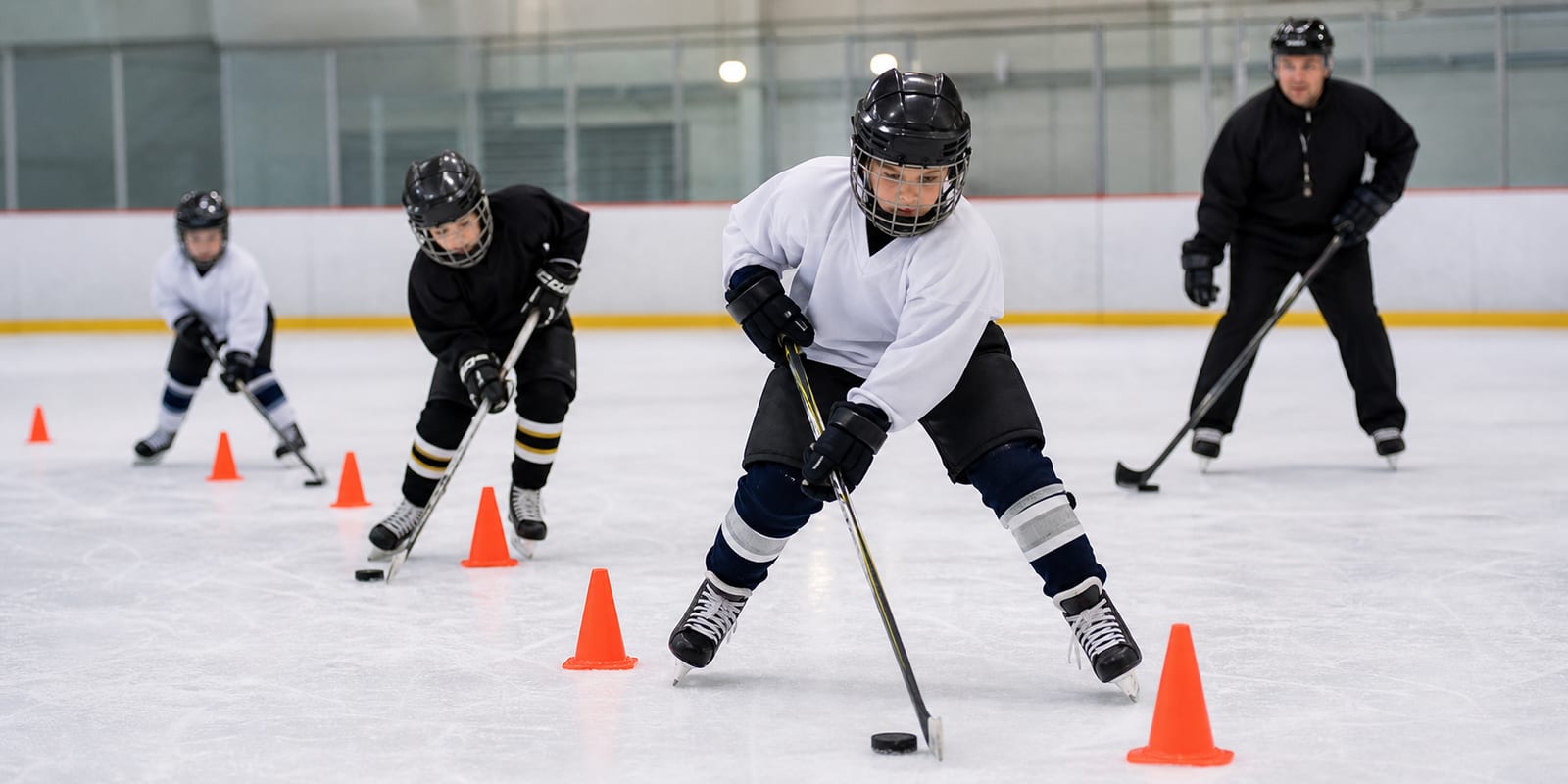
Coaches can introduce angling with no contact at all, having players skate a curved path to close off a partner's route to a cone or puck. Once the pattern is understood, light pressure can be added so players feel the difference between angling and simply chasing.
- Start with a no-contact skating drill: one player angles a partner away from a target.
- Add a puck so the angling player learns to close the gap while still tracking it.
- Introduce light body position, shoulder to shoulder, once angling technique is solid.
- Progress to game-like puck battles only after both steps are consistent.
Safe Positioning Along the Boards
Board battles are where a lot of incidental contact happens, and where poor body position creates the most risk. A player who turns their back to an opponent along the boards, chasing a puck with their head down, is far more vulnerable than one who stays square.
Coaches should emphasize keeping the head up and knees bent in board battles, well before any competitive drill involves real pressure. This is a habit best built slowly, through repetition in low-pressure settings, rather than corrected only after a collision happens.
| What Coaches Should See | Risk If Missing |
|---|---|
| Head up, aware of surroundings | Blind-side contact, higher injury risk |
| Knees bent, low center of gravity | Easily knocked off balance |
| Body angled toward the puck, not turned away | Back exposed to incidental contact |
Building the Foundation Safely, Not Waiting for Checking Clinics
Waiting until a formal checking clinic to introduce any of these habits puts players behind, since angling and body position take repetition to become instinctive. Introducing them early, well before contact is allowed to be intentional, gives players a longer runway to build good habits.
None of this replaces a certified checking progression when the time comes. It simply means players arrive at that stage already comfortable with positioning, rather than learning everything about contact at once.
Angling and body position are contact skills, even though no rulebook calls them checking yet. Teaching them early is what makes the eventual introduction of checking safer, not riskier.
Related SportX1 resources
Frequently asked questions
At what age is checking typically introduced in youth hockey?
This varies by association, but many introduce it starting around the 13-and-under age level, though rules differ by league and region.
Is it safe to teach body contact before checking is allowed?
Yes, when the focus stays on angling and positioning rather than intentional hits, this kind of contact happens naturally during puck battles and is safer when players are taught to handle it.
What's the biggest positioning mistake young players make along the boards?
Turning their back to an opponent while chasing the puck with their head down, which removes their ability to see or brace for incidental contact.
Build contact-readiness into your practice plan
Use SportX1 to sequence angling and positioning drills, then track each player's readiness before checking is introduced.
Related articles
Simple Edge-Work Drills That Build Skating Confidence
A youth hockey coach's guide to teaching edge control through simple, repeatable drills that build the skating foundation everything else depends on.
Teaching Youth Hockey Players to Support the Puck Carrier
How youth hockey coaches can teach players to support the puck carrier with give-and-go timing and passing-lane positioning instead of chasing the puck as a group.
How to Coach a Youth Hockey Team Through a Losing Streak
How youth hockey coaches can keep a team's effort and confidence up through a losing streak by refocusing on process goals instead of the scoreboard.
About the author
SportX1 Editorial Team
Coach-reviewed guidance for youth sports learning, player development, team operations, and AI-supported coaching workflows.