

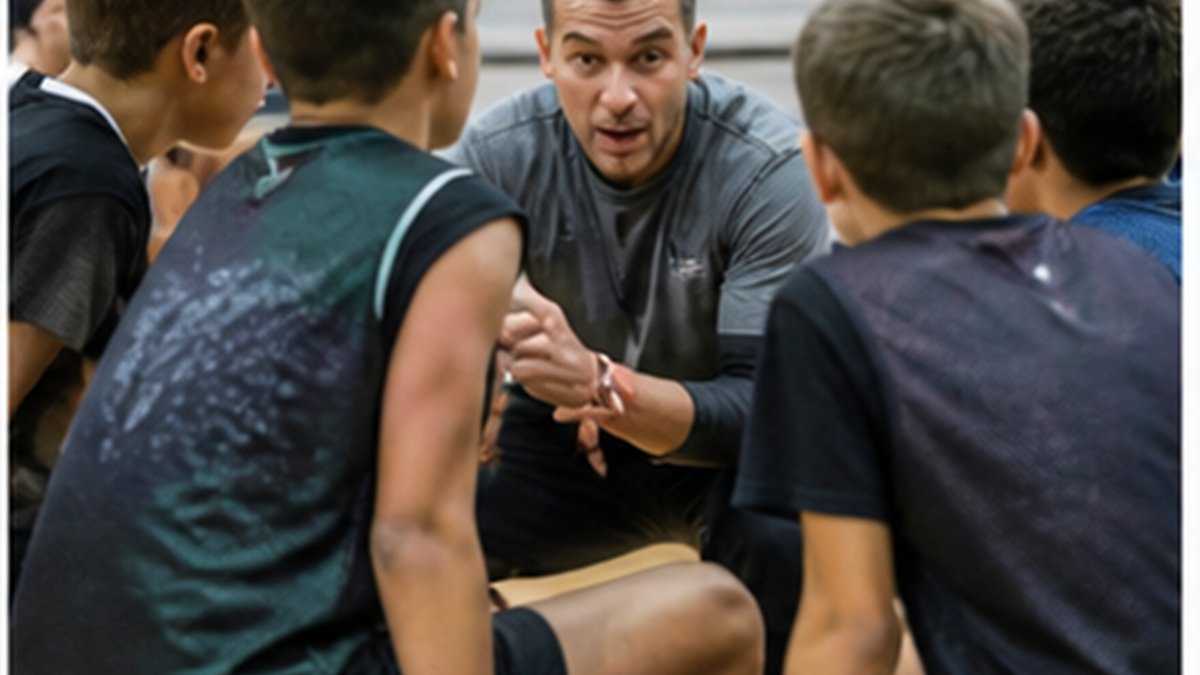
Quick summary
- Bench engagement means staying mentally in the game and ready to check in, not just sitting through minutes off the court.
- Giving bench players a specific job during the game keeps them involved instead of checked out.
- How a coach treats bench time has more influence on whether a player stays engaged than the amount of playing time itself.
What Bench Engagement Actually Looks Like
Definition
Bench engagement: Staying mentally in the game while off the court, tracking the matchup and score, communicating with teammates, and being ready to check in without a delay when a coach calls a name.
It's easy to assume a player is fine on the bench simply because they aren't causing a problem. But a player who's quietly checked out mentally is just as unready to contribute as one who's visibly sulking.
Engagement is a habit coaches can teach and reinforce, not a personality trait some players have and others don't. That distinction matters, because it puts the responsibility partly on the coaching, not only on the player.
A player who has to be told twice to check in wasn't watching the game. That's a coaching cue to fix, not just a discipline issue.
Giving Bench Players a Job
A player with nothing specific to do on the bench tends to drift, especially in a close game where their own minutes feel uncertain. Giving every rotation player a concrete role changes what they're paying attention to.
The job doesn't need to be complicated. It just needs to require watching the game closely enough that the player stays connected to what's happening.
- Track fouls or matchups for the player they'll likely guard when they check in.
- Call out ball screens or cuts from the bench during live play.
- Lead specific, situational cheering tied to what's happening on the court, not generic noise.
Building a Ready-to-Check-In Routine
A player who's surprised when their name is called usually needed a few extra seconds to get physically and mentally ready, and those seconds show up as a slow, sluggish start on the floor. A simple routine closes that gap.
Practicing this routine in scrimmages, not just talking about it, is what makes it automatic during a real game.
- Stay standing or on the edge of the bench during close stretches of the game.
- Know the current score, foul situation, and who they're likely to guard before their name is called.
- Check in with energy, matching the pace of the game rather than easing into it.
Coach Behaviors That Help or Hurt Engagement
Bench engagement isn't only about what a player does; it's also shaped heavily by how a coach treats bench time. A coach who only speaks to bench players to correct them teaches those players to expect bench time is just waiting to be criticized.
Small, consistent habits from the coach, like brief in-game feedback or acknowledging good bench communication, do more for retention over a season than any single pep talk.
| Coach habit | Effect on bench players | Better approach |
|---|---|---|
| Only talking to bench players about mistakes | Bench time feels like a penalty | Give brief, specific feedback on effort too |
| Ignoring the bench during the game | Players disengage and stop tracking the game | Assign a job and check in during timeouts |
| Explaining rotations only after the game | Players are surprised or resentful about minutes | Set expectations about rotations before the game |
Related SportX1 resources
Frequently asked questions
How much bench time is normal for a youth basketball player?
It varies by league and roster size, but most youth programs aim for meaningful minutes for every rostered player across a game or season, even if minutes aren't equal game to game.
What should a coach do about a player who sulks on the bench?
Address it directly but privately, and pair the conversation with a specific bench role. Often the sulking is a response to feeling disconnected from the game, not just disappointment about minutes.
Does keeping the bench engaged actually affect whether players stay in the sport?
Yes. Players who feel disconnected from the team during games, even when they aren't the ones playing poorly, are more likely to lose interest in the sport over time than those who feel involved regardless of minutes.
Keep every player connected to the team
Use SportX1 to communicate rotation expectations, assign bench roles, and keep lower-minute players engaged and invested all season.
Related articles
Basketball Drills That Teach Players When to Pass
Three basketball drill formats that teach young players to read help defense, move the ball, and make decisions without freezing.
Teaching Defensive Footwork That Protects Young Knees
Why defensive slide fundamentals should be taught around avoiding crossed feet and controlled deceleration, not just 'get low and slide,' to protect still-developing knees.
Best App for Youth Basketball Coaches: What to Look For
A practical guide to choosing a youth basketball coaching app for practice planning, player development, AI support, and team communication.

About the author
SportX1 Editorial Team
Coach-reviewed guidance for youth sports learning, player development, team operations, and AI-supported coaching workflows.