

Quick summary
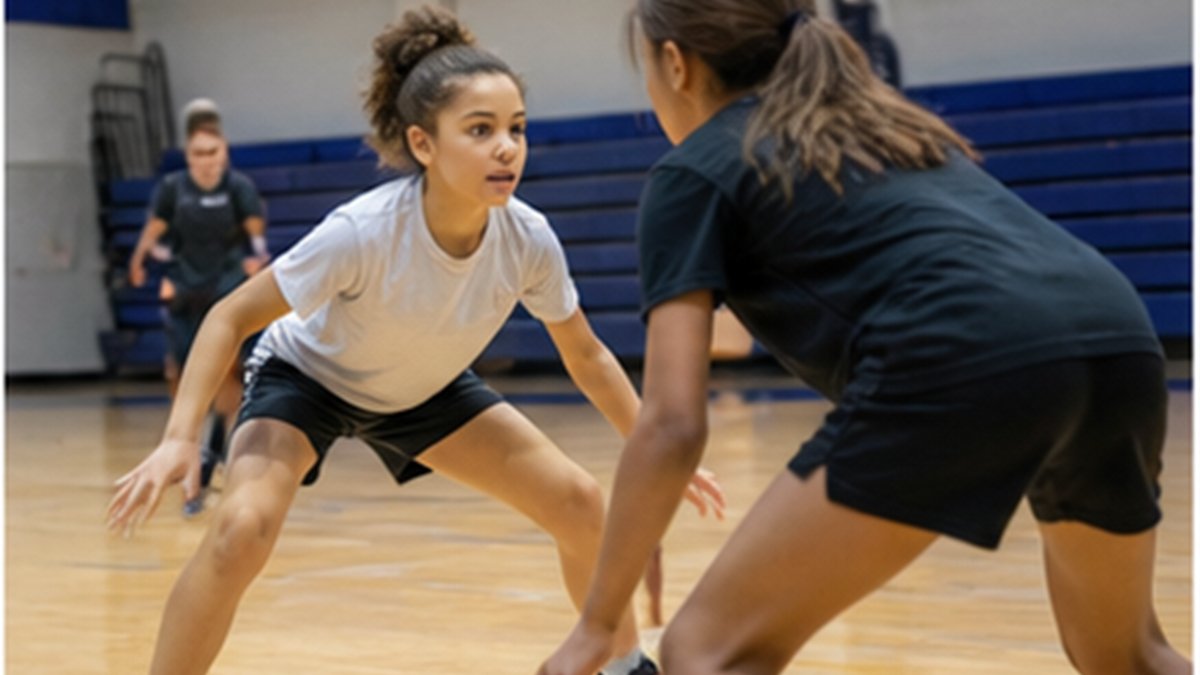
- Defensive slide footwork should be taught around keeping feet apart and controlling deceleration, not just getting low.
- Crossing the feet on a slide is both a defensive weakness and a real knee-injury risk for young players.
- Short, controlled footwork reps in warmups build the habit better than long, fatiguing defensive slide drills alone.
What Safe Defensive Footwork Looks Like
Definition
Defensive slide: A lateral shuffling movement that keeps the feet apart and the base low and controlled, allowing a defender to stay in front of an offensive player without over-stressing the knees.
Coaches often teach defensive stance with a single instruction: get low and slide. That cue leaves out the part that matters most for young, still-developing knees, which is how the feet move relative to each other.
A safe slide keeps the feet from ever crossing and controls the speed of each step. Those two details do more to protect a young player's knees than stance depth alone.
Getting low without controlling the feet just changes where the stress on the knee shows up. Both parts of the movement need coaching.
Why Crossing the Feet Is a Knee Risk
When a young player's feet cross during a defensive slide, their base narrows and their weight shifts onto a single, often rotated leg. That position puts uneven, twisting load on a knee joint that isn't fully developed.
It also happens most often when a player is rushed or fatigued, which is exactly when coaching cues tend to get skipped. That's why the habit needs to be built early, before speed and fatigue are added.
- Crossing the feet narrows the base and reduces balance.
- It shifts load onto a single, often rotated knee.
- It most often appears under fatigue or rushed movement, not in a controlled drill.
Teaching Controlled Deceleration
Defensive footwork isn't only about moving; it's about stopping under control, like on a closeout or a change of direction. An uncontrolled stop puts sudden, high load on the knees at the exact moment a player is trying to react.
Teaching a player to decelerate over two or three short steps, rather than planting hard on one, spreads that load out and gives the joint time to absorb it.
- Break the closeout or stop into two or three short, choppy steps.
- Keep the base wide and knees bent through the deceleration, not stiff.
- Land in a balanced stance ready to slide again, not standing tall.
Building Footwork Into Every Warmup
Long, exhausting defensive slide drills tend to reinforce bad habits once fatigue sets in, which works against the goal of protecting the knees. Short, focused reps at the start of practice, while players are fresh, build the habit more reliably.
Coaches don't need a separate defensive session to build this in. A few minutes of purposeful footwork inside the regular warmup is usually enough.
| Drill | Focus | Length |
|---|---|---|
| Mirror slides | No crossed feet, controlled base | 2 minutes |
| Closeout and stop | Choppy deceleration steps | 2 minutes |
| Direction-change slides | Controlled stop before changing direction | 2 minutes |
Related SportX1 resources
Frequently asked questions
At what age should coaches start teaching defensive footwork?
Coaches can introduce basic slide mechanics, feet apart, no crossing, as early as age 7 or 8, focusing on control rather than speed until the habit is set.
How often should defensive footwork be part of practice?
A few minutes of focused footwork in most warmups is usually enough. It doesn't need to be a long or separate block, just a consistent one.
Is 'get low and slide' bad coaching advice?
It's not wrong, but it's incomplete. Without also coaching foot spacing and controlled deceleration, players can get low while still moving in a way that stresses the knees.
Build knee-safe footwork into every practice
Use SportX1 to plan warmup progressions, track movement fundamentals, and keep defensive footwork development consistent all season.
Related articles
Basketball Drills That Teach Players When to Pass
Three basketball drill formats that teach young players to read help defense, move the ball, and make decisions without freezing.
How to Track Basketball Player Development Without Extra Spreadsheets
How youth basketball coaches can track player growth, skill goals, feedback, and confidence without creating another spreadsheet routine.
How to Keep Bench Players Engaged During Youth Basketball Games
Practical ways to keep rotation players mentally in the game and ready to check in, so lower-minute players stay engaged instead of checked out on the bench.
About the author
SportX1 Editorial Team
Coach-reviewed guidance for youth sports learning, player development, team operations, and AI-supported coaching workflows.