


Quick summary
- Most youth hitting slumps are driven by confidence, not by a mechanical flaw that needs fixing.
- Changing multiple parts of a swing at once during a slump usually makes it last longer, not shorter.
- Small, visible wins in practice rebuild a player's trust in their swing faster than a technical overhaul.
What Actually Counts as a Slump
Definition
Hitting slump: A stretch of games where a player's results fall well below their normal performance, often driven by hesitation or overthinking at the plate rather than by a real change in swing mechanics.
A few bad at-bats isn't a slump, it's baseball. A real slump is a pattern, usually a week or more, where a player who normally makes solid contact starts looking uncertain in the box.
The instinct is often to look for what changed in the swing. More often than not, what changed is what's happening in the player's head before the pitch.
- Hesitation or late swings, even on hittable pitches.
- Visible frustration carrying from one at-bat into the next.
- A swing that still looks mechanically fine in the cage but not in games.
Avoid Overcorrecting the Swing Mid-Slump
When a player is struggling, it's tempting to fix everything at once, the stance, the load, the hands, the timing. Changing multiple things during a slump usually adds more to think about, not less.
Before touching mechanics, coaches should watch enough at-bats to tell whether this is really a mechanical issue or a confidence one wearing a mechanical disguise.
- Watch several at-bats without commenting, looking for a pattern rather than reacting to one swing.
- Ask the player what they're thinking about in the box before offering a fix.
- If mechanics need adjusting, pick one single change, not several.
- Give any change a real sample of live at-bats before deciding whether it worked.
Rebuild Confidence With Small, Visible Wins
A player in a slump needs proof their swing still works before they'll trust it again in a game. Practice settings, where outcomes are more controlled, are a good place to manufacture that proof.
The wins don't need to be dramatic. A hard-hit ball in batting practice, called out and reinforced, does real work toward rebuilding a player's trust in their own swing.
| Setting | What Counts as a Win | Why It Helps |
|---|---|---|
| Batting practice | Hard contact, regardless of result | Separates effort from outcome |
| Soft toss | Consistent, repeatable swing | Rebuilds trust in mechanics |
| Live at-bat | A good take on a tough pitch | Reinforces plate discipline, not just hits |
Keep the Conversation About Effort, Not Just Results
A player in a slump already knows their batting average. Reminding them isn't useful. What helps is redirecting the conversation toward things they can control right now, like their approach and their swing decisions.
This kind of framing also keeps a slump from turning into a bigger confidence problem that follows the player into other parts of the game.
A player who feels judged on results alone during a slump learns to fear the batter's box. A player who hears their effort and approach recognized learns to trust it again.
Related SportX1 resources
Frequently asked questions
How long is a normal slump for a youth player?
It varies, but most confidence-driven slumps start to turn around within one to two weeks of focused, low-pressure practice reps, especially once mechanics are ruled out as the cause.
Should parents get involved in helping a player through a slump?
Parents can help most by keeping the conversation light and avoiding extra pressure at home. Coaches should generally lead any mechanical or mental adjustments.
When does a slump actually call for a mechanical change?
When the same specific miss shows up consistently, like repeatedly being late on fastballs, across both practice and games, that pattern points to mechanics rather than confidence.
Track effort, not just results, through a slump
Use SportX1 to log effort and approach alongside outcomes, so a rough stretch of games doesn't erase the progress a player is actually making.
Related articles

A Simple Throwing Progression for Youth Baseball Players
A step-by-step throwing progression youth baseball coaches can use to build arm mechanics and accuracy safely, before adding velocity or distance.

How to Teach a Hitting Stance and Load Young Hitters Can Repeat Under Live Pitching
A simple, repeatable hitting stance and weight-load mechanism for youth hitters that holds up against live pitching without piling on swing thoughts.
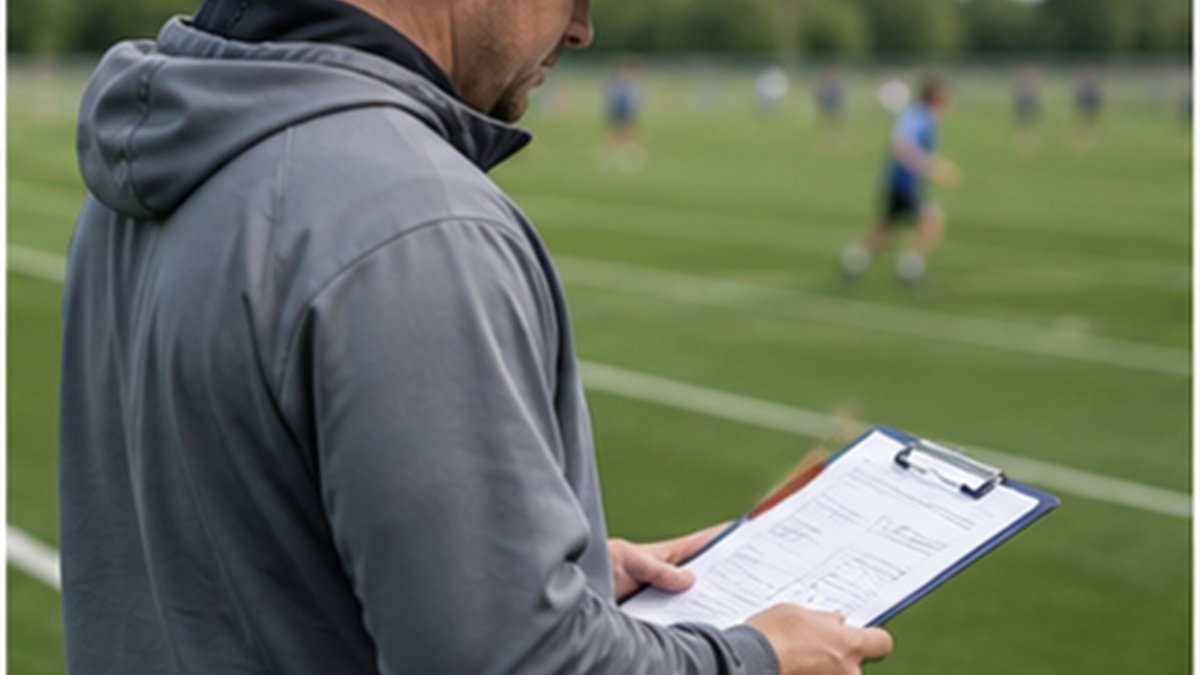
How to Give Youth Athletes Feedback They Actually Use
A practical framework for youth coaches to give feedback that's specific, timely, and short enough for players to remember and apply on the next rep.

About the author
SportX1 Editorial Team
Coach-reviewed guidance for youth sports learning, player development, team operations, and AI-supported coaching workflows.