
Quick summary
- AI can quickly draft easier and harder versions of the same drill, saving coaches from rewriting variations by hand.
- The goal of differentiation is to keep the coaching objective the same across every tier, not to give players different goals.
- Coaches still need to review each AI-drafted version and decide which player runs which tier during live practice.
Why Every Youth Practice Has a Skill Gap
Definition
Differentiated drill: The same drill adapted into two or three versions so players at different skill levels are all working on the same objective without one group standing around or another getting overwhelmed.
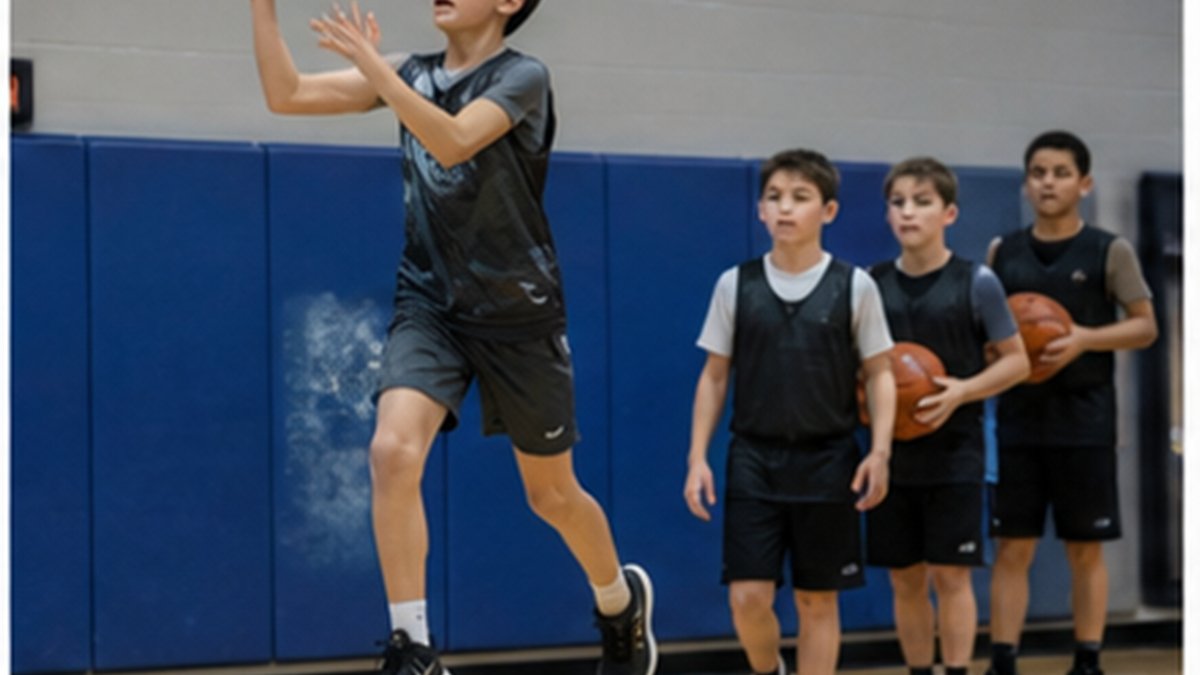
Most youth teams aren't grouped by ability. A single practice can include a player who's played for four years standing next to one who just started, and the same 20-minute drill block has to work for both.
Writing three versions of every drill by hand takes time most coaches don't have between practices. That's usually why differentiation gets skipped, not because coaches don't see the gap.
- A recreational team spanning three grade levels
- A club team with new players mixed into a returning core
- A middle school team with players who came from different programs
How AI Can Draft Tiered Variations in Minutes
Describe the base drill and its objective, then ask an AI tool to create an easier and a harder version that keep the same coaching point. The output is a starting draft, not a finished plan.
The value isn't that AI invents new drills. It's that it removes the blank-page time of rewriting constraints, distances, or rules for each skill level.
- Describe the base drill, the age group, and the specific skill it's teaching.
- Ask for one simplified version that removes a constraint, like fewer defenders or more space and time.
- Ask for one advanced version that adds a constraint, like time pressure or a decision under opposition.
- Read every version before practice and adjust anything that doesn't fit the team.
Keep the Objective Constant Across Every Tier
The point of differentiation is not to give different groups different goals. It's to give every player a version of the same skill they can actually succeed at, so the whole team is working toward the same outcome.
A table like this helps a coach sanity-check that an AI-drafted variation hasn't quietly changed what's being taught.
| Tier | Adjustment | What Stays The Same |
|---|---|---|
| Simplified | Remove defenders or add space and time | Core skill and coaching cue |
| Standard | Drill as originally designed | Core skill and coaching cue |
| Advanced | Add pressure, speed, or a decision | Core skill and coaching cue |
The Coach Still Decides What Each Player Runs
AI can draft the variations, but only a coach watching practice knows which player needs the simplified version this week and which one is ready to move up. That judgment doesn't transfer to a prompt.
Treat every AI-drafted tier as a rough cut. Coaches should still adjust wording, safety considerations, and pacing to match what they know about their own players.
AI can write three versions of a drill in the time it takes to write one by hand. It still can't watch a player struggle and know which version they need next.
Related SportX1 resources
Frequently asked questions
Will AI-generated drill variations actually match my team's skill levels?
Only if the coach reviews and adjusts them. Treat the output as a draft built from a general description, not a plan calibrated to specific players.
How many tiers should a coach realistically create?
Two or three is usually enough, like a simplified version, the standard drill, and one advanced variation, rather than something for every individual player.
Does this replace grouping players by ability?
No. Differentiated drills work alongside grouping, giving coaches a faster way to run different tiers within the same practice block, not a replacement for it.
Draft differentiated drills faster with SportX1
Use SportX1 to build tiered practice plans and track which players are ready to move up.
Related articles
AI Practice Planning Prompts Coaches Can Actually Use
Prompt patterns for creating a useful first draft of a practice plan, then checking it for age level, safety, space, and coaching language.
What AI Should Never Decide in Youth Coaching
A practical guide to where AI belongs in youth coaching and where it doesn't, covering the playing time, discipline, and safety decisions that should always stay with a human coach.

How to Set Player Development Goals for a Youth Team
A simple way to set player development goals that are specific, visible in practice, and easy for players to remember.
About the author
SportX1 Editorial Team
Coach-reviewed guidance for youth sports learning, player development, team operations, and AI-supported coaching workflows.