

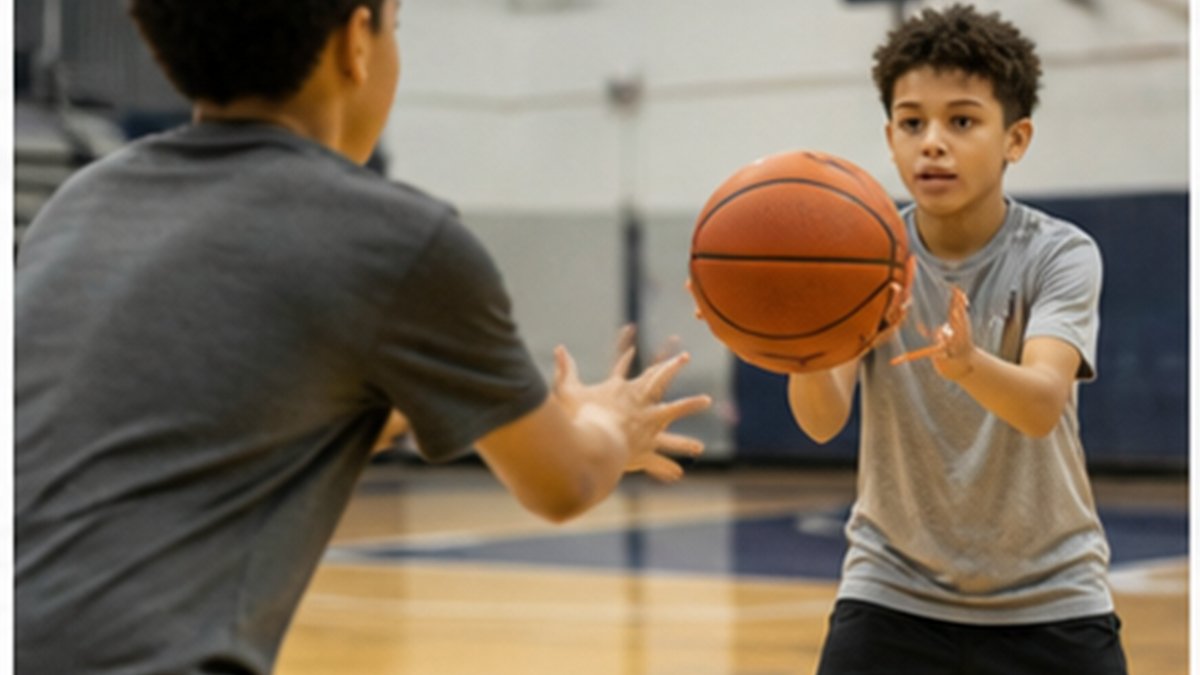
Quick summary
- Reading a ball screen means recognizing how the defense reacts, hedge, switch, or go under, and choosing the response that fits.
- Both the ball handler and the screener need a role in the read, not just the player with the ball.
- Small-sided 2v2 drills build faster recognition than full five-on-five reps early on.
What a Ball Screen Read Actually Is
Definition
Ball screen read: Recognizing how the on-ball defender and the screener's defender react to a screen, then choosing the footwork, pass, or attack that takes advantage of that specific coverage.
Many youth ball handlers treat a screen as a fixed cue: get a screen, turn the corner, attack. That works against one coverage and fails against the other two, which is why the read matters more than the action itself.
Teaching the read starts with slowing the game down enough for a player to notice what the defense is actually doing. Speed comes later, once the recognition is automatic.
A player who reacts to the screen instead of the defense is only ready for one of three common coverages.
Recognizing the Three Common Coverages
Youth defenses generally respond to a ball screen in one of three ways, and each calls for a different answer from the ball handler. Naming these coverages out loud in practice helps players start to see them in real time.
Coaches don't need advanced terminology to teach this. Simple, consistent language repeated every practice is what makes the read stick.
| Defense's reaction | What it looks like | Ball handler's best response |
|---|---|---|
| Hedge | Screener's defender jumps out hard to slow the ball handler | Snap the dribble back or hit the screener rolling |
| Switch | Defenders trade assignments on the screen | Attack the mismatch or reset and reassess |
| Go under | On-ball defender ducks under the screen | Take the open jump shot if available |
Teaching the Screener's Half of the Read
The screener isn't just a pick; they're the second half of the read. A screener who sets the pick and stands still wastes the advantage the coverage just gave the team.
Once a young player learns to set a solid, on-time screen, the next step is teaching them to read the same defensive reaction the ball handler is reading, so both players are working off the same information.
- Set the screen with a wide, stationary base and good timing, not just proximity to the defender.
- Read the coverage as it happens, not before.
- Roll to the basket against a hedge or switch, or pop out for a pass against a defender who goes under.
Building Reads Through Small-Sided Drills
Full five-on-five reps move too fast for a young player to isolate the read, especially early in the season. A 2v2 setup slows the game down enough for the ball handler and screener to actually see the coverage.
Coaches can control the drill by assigning the defense a specific coverage to run, then removing that constraint once players start recognizing it on their own.
- Run 2v2 with the defense told to hedge every screen for a set of reps.
- Switch the constraint to a forced switch coverage for the next set.
- Remove the constraint and let the defense choose, then debrief what the offense saw.
Related SportX1 resources
Frequently asked questions
What age can youth players start learning to read ball screens?
Most coaches introduce basic screen reads around age 10 to 11, once players can consistently execute a pick-and-roll action without the read layered on top.
What's the difference between a hedge and a switch?
A hedge is a temporary, hard show from the screener's defender who then recovers back to their own player, while a switch permanently trades defensive assignments between the two defenders.
What's the most common mistake young players make with screens?
The most common mistake is the ball handler using the screen before it's actually set, or the screener leaving too early, which gives the defense an easy way to avoid the action entirely.
Plan ball screen progressions that build real reads
Use SportX1 to script small-sided coverage drills, track which reads each player has mastered, and build toward live-speed decision-making.
Related articles
Basketball Drills That Teach Players When to Pass
Three basketball drill formats that teach young players to read help defense, move the ball, and make decisions without freezing.
How to Teach a Repeatable Shooting Form Young Players Can Trust
A simple, consistent shooting base, alignment, and follow-through youth basketball coaches can teach so form holds up under game pressure, not just in an empty gym.
How to Create a Youth Basketball Practice Plan Players Can Follow
A youth basketball practice-planning framework coaches can use to build clearer sessions, save time, and keep players connected to one learning goal.
About the author
SportX1 Editorial Team
Coach-reviewed guidance for youth sports learning, player development, team operations, and AI-supported coaching workflows.