


Quick summary
- A bad period doesn't have to become a worse one, but only if a wrestler has a routine ready for the break between periods.
- The routine should be short, physical, and identical every time, whether the period just went well or badly.
- Practicing the reset in the room, not just describing it, is what makes it hold up during an actual match.
What a Between-Period Reset Routine Is
Definition
Between-period reset routine: A short, consistent sequence a wrestler runs through in the break between periods, designed to clear the last period and prepare for the next one, regardless of how the last one went.
The break between periods is short, often less than 30 seconds, but it's long enough to either settle a wrestler down or let a bad period keep snowballing. Most young wrestlers spend that time reacting instead of resetting.
A routine gives that short window a job to do. It's not about analyzing what went wrong, there isn't time for that, it's about getting the wrestler physically and mentally ready for what's next.
The break between periods is too short for analysis. It's just long enough for a routine, if the wrestler already has one.
Keep the Routine to a Few Repeatable Steps
A reset routine works best when it's simple enough to run through without thinking, since a wrestler who's frustrated or gassed won't have the bandwidth for anything complicated. Three or four steps is usually plenty.
The same routine should run every time, whether the previous period went well or poorly. Changing it based on the score turns it back into a reaction instead of a routine.
- Take a set number of controlled breaths, the same count every time, before anything else.
- Get a drink of water and a quick physical reset, like shaking out the arms or standing up straight.
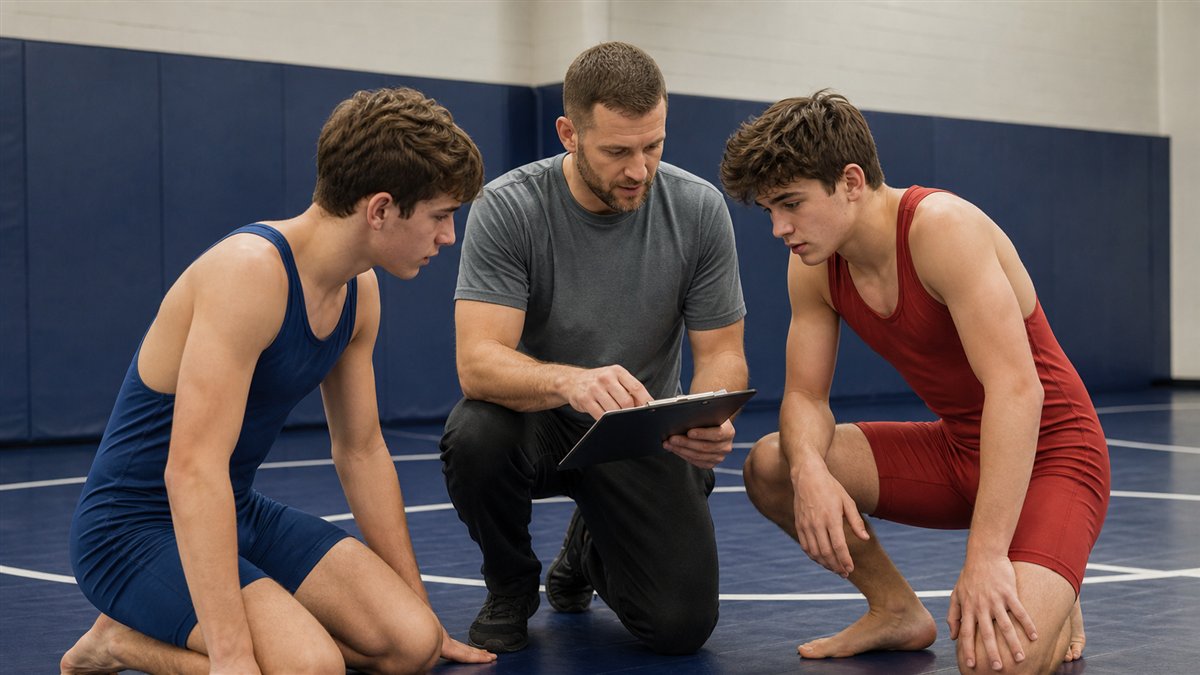
- Hear one short cue from the coach, a single technical or tactical focus for the next period, not a recap of the last one.
- Make eye contact with the coach as a final signal that the wrestler is ready to go back out.
Recognize When a Wrestler Needs the Routine Most
The routine matters in every match, but it matters most after a period that didn't go well, a takedown given up, a missed opportunity, a bad call. That's exactly when a wrestler is most likely to skip the routine and go straight back out rattled.
Coaches can watch for a few visible signs that a wrestler is skipping their reset and heading into the next period still carrying the last one.
- Wrestler avoids eye contact or doesn't respond to the coach's cue
- Breathing stays rushed instead of settling during the water break
- Wrestler heads back to the circle early, before the routine is finished
Practice the Routine Before It's Needed in a Real Match
A routine that's only explained, never practiced, tends to disappear exactly when it's needed most. Coaches should run the reset in practice matches too, not only save it for real competition.
This also gives coaches a chance to see which version of the routine actually works for each wrestler, since a young athlete carrying real anxiety may need one extra step, like a wrestler who benefits from a specific phrase along with the breathing count.
After a good period
The routine still runs the same way. Reinforcing that the steps don't change keeps the wrestler from associating the routine only with recovering from a bad one.
After a bad period
This is where the routine earns its value. A coach's one cue should point forward, toward the next period's focus, rather than dwelling on what just went wrong.
Related SportX1 resources
Frequently asked questions
How long should a between-period reset routine take?
It should fit inside the actual break between periods, usually 20 to 30 seconds, so it needs to be short enough to run through without rushing.
Should the routine change if a wrestler is winning big or losing big?
No, the steps should stay the same regardless of score. What can change is the coach's one-line cue, which should still point to the next period rather than the last one.
How do coaches teach a reset routine to a young team?
Introduce it in practice matches first, using the same steps every time, so it feels familiar by the time a wrestler needs it in real competition.
Coach the moments between periods, not just the periods themselves
Use SportX1 to track how wrestlers respond under pressure, plan focused between-period cues, and connect it to each athlete's development goals.
Related articles

Why Stance and Motion Deserve More Practice Time Than Coaches Give Them
A case for spending more youth wrestling practice time on stance and motion, the foundation that makes every shot, sprawl, and scramble work better.

Building Safe Weight-Management Habits in a Youth Wrestling Room
How youth wrestling programs build a culture around safe, age-appropriate weight management, with clear communication between coaches and parents.
How to Track Wrestling Player Development Without Extra Spreadsheets
How youth wrestling coaches can track player growth, skill goals, feedback, and confidence without creating another spreadsheet routine.

About the author
SportX1 Editorial Team
Coach-reviewed guidance for youth sports learning, player development, team operations, and AI-supported coaching workflows.